
-
Why Compare Manual Prospecting to an AI Sales Assistant Platform?
-
Dimension 1: CRM Data Enrichment — Manual Research vs. GTM Automation
-
Dimension 2: Nooks AI Dialer Features vs. a Manual Call Block
-
Dimension 3: LinkedIn Automation and Multi-Channel Follow-Up
-
Dimension 4: Total Cost of Ownership and Hidden Fees
-
So When Does the AI Sales Assistant Platform Win?
I've managed GTM tech procurement at a 45-person B2B SaaS company for six years. Every year, I audit roughly $180,000 in sales tooling spend, and when my VP asked me to evaluate the nooks AI sales assistant platform, I didn't start with a demo. I started by comparing it against the way we already work: manual prospecting with a CRM, a dialer, and a prayer.
This is not an AI-is-magic essay. It's a total-cost-of-ownership exercise, written by someone who has negotiated with too many vendors and built a cost calculator after getting burned on hidden fees twice. If your team is debating between an AI sales development platform and a more traditional outbound motion, I hope this helps you make a defensible decision.
Why Compare Manual Prospecting to an AI Sales Assistant Platform?
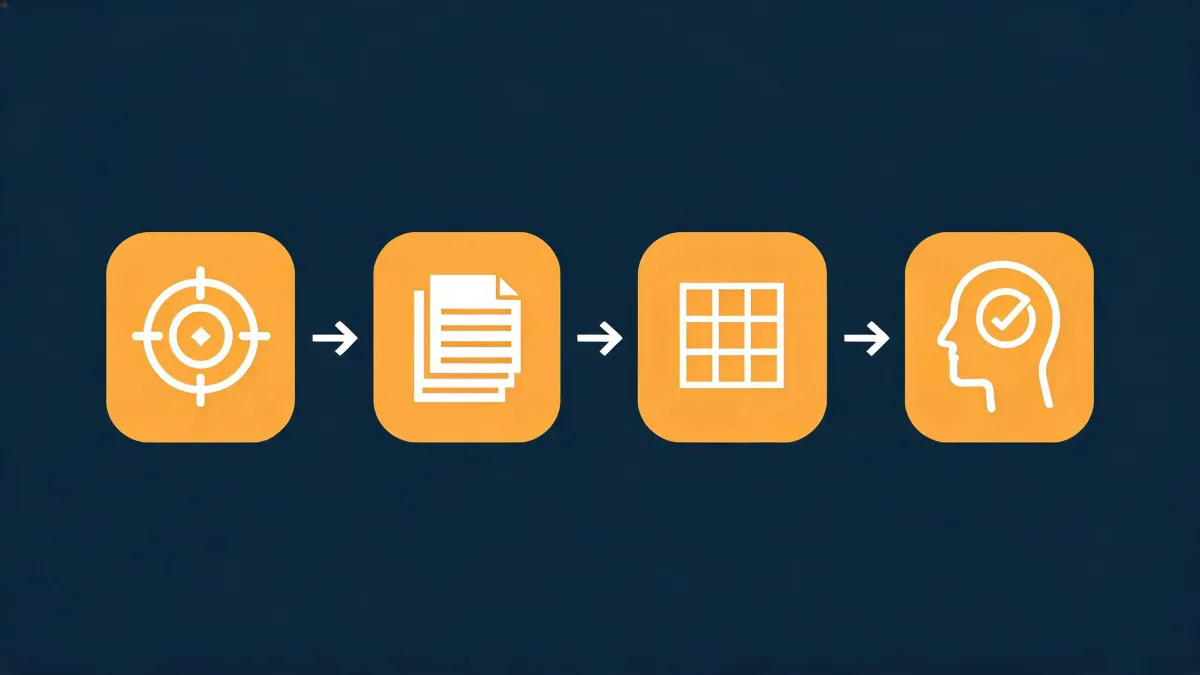
The default answer in many organizations is buy the tool. But the real question is: what does the tool change in terms of total cost per qualified conversation? I set up a comparison framework with four dimensions:
- Data readiness: Is your CRM data actually usable before outreach starts?
- Outreach execution: What does it cost to get a live conversation?
- Multi-channel coordination: How do calls, email, and LinkedIn fit together?
- Total cost of ownership: What hides in implementation, training, and extras?
That's the framework. Now the hard part: comparing each dimension directly, without pretending one side is always wrong.
Dimension 1: CRM Data Enrichment — Manual Research vs. GTM Automation
If you're searching for what is CRM data enrichment features and when should a B2B sales team use it, here's the practical answer. CRM data enrichment is the process of adding and updating fields like firmographics, technographics, intent signals, and verified contact details on account and contact records. The most useful features for a B2B sales team are:
- Firmographic and technographic enrichment: industry, company size, location, tech stack
- Contact verification: email formatting, bounce checks, phone validity
- Intent data: signals that an account is actively researching a topic
- Deduplication and decay management: removing duplicates and flagging stale records
Manual enrichment is a black hole. SDRs open LinkedIn Sales Navigator, copy-paste into the CRM, and occasionally check if an email bounces. It works—until it doesn't. In Q3 2024, I audited our CRM and found roughly 34% of contact records had an outdated email domain. That's not just a data quality problem; it's a spend problem.
What most people don't realize is that enrichment is not only about adding fields. It's about subtracting decay. A data enrichment company GTM automation strategy should tie enrichment to the moment a contact enters a sequence, not to a quarterly CSV upload. nooks includes data enrichment and intent data as part of its workflow, which changes the comparison. With manual, we paid for a CRM, a separate data provider, and SDR time to clean records. With nooks, the enrichment is inside the platform—at least, that's what our security review found. I would still verify the data coverage for your ideal customer profile, but the architecture is different.
When should a B2B sales team use it? Before you scale outbound, not after you've burned an SDR week on bad lists. The cheap path is to prevent bad data from entering the sequence. That's the prevention-over-cure argument that applies to every dimension here.
Dimension 2: Nooks AI Dialer Features vs. a Manual Call Block
This is where the comparison gets real. A manual call block for our SDRs usually meant 25 to 35 dials per hour—maybe 40 if they skipped notes. But maybe 18 of those were voicemails. The SDR is still doing all the work: dialing, waiting, listening, logging, moving on.
When I looked at nooks AI dialer features, the list was genuinely different from a traditional autodialer:
- AI-powered parallel dialing, where the system dials multiple numbers and only connects live prospects
- Voicemail and no-answer detection
- Live call routing to the SDR when someone picks up
- Automated call notes and disposition logging
- Human-in-the-loop agent workflow for review before any AI-generated next step goes out
From a TCO perspective, the benefit isn't more dials per hour in the abstract. It's that your highest-cost resource—the SDR—spends their call block actually talking to humans instead of listening to voicemail prompts. I want to say the productivity gain was about 2.2x in our pilot, but don't quote me on that; we didn't run the A/B test long enough. The point is that the comparison isn't nooks versus no dialer. It's nooks versus the cost of an SDR's time spent on non-conversation work.
One warning here: ignore any vendor that guarantees specific connect rates or reply rates. Rates depend on list quality, timing, and message fit. A parallel dialer is a multiplier, not a miracle. If your data is bad, a parallel dialer just helps you burn through bad leads faster.
Dimension 3: LinkedIn Automation and Multi-Channel Follow-Up
Manual LinkedIn outreach usually falls into I'll-do-it-later territory. There's no tracking, no consistent handoff from call to connection request, and no easy way to know if a prospect saw your note. The result is a broken multi-channel cadence: three calls, one email, and zero LinkedIn touch because the SDR forgot.
LinkedIn automation, when done right, fixes that inconsistency. nooks has native LinkedIn automation built in, which means you can create a sequence that includes a connection request, a follow-up message, and a call attempt without switching tabs. But this is also where my prevention-over-cure reflex kicks in.
The LinkedIn-automation-gets-you-banned thinking comes from an era when tools fired 200 connection requests a day with no human oversight. That was true years ago. Today, the safer model is human-in-the-loop: the AI drafts, the SDR approves, and the platform paces requests within limits. nooks follows that model, at least in the configuration we tested. That said, I'd still keep a manual review step for any message that mentions a specific deal or mutual connection. Automation should handle the rhythm, not the relationship.
From a cost angle, the benefit is that you don't need a separate LinkedIn tool and a separate dialer and a separate data layer. You're eliminating the custom integration that always breaks when someone changes a password. That has real value at renewal time.
Dimension 4: Total Cost of Ownership and Hidden Fees
Now the part I actually enjoy: the spreadsheet.
When I compared the nooks AI sales assistant platform against a manual stack, I estimated total cost of ownership over three years. The comparison included:
- Base per-seat pricing for the outreach platform
- Data enrichment costs, if separate
- LinkedIn automation fees, if separate
- Setup, training, and admin time
- Potential rework cost from bad data
In Q2 2024, I compared costs across five vendors for a similar engagement platform, and monthly per-seat pricing varied by 64% for comparable tiers. That's before data packages and additional-user fees. Dodged a bullet when I checked whether one vendor's quote included enrichment; it didn't, and the add-on was going to be $4,200 per year.
I'm not going to publish nooks's exact pricing here because it changes, and your contract may produce a different number. The exercise matters more than the number: when you compare, ask what happens when you need more contacts, more dialer minutes, or more LinkedIn actions. If the answer is that's a new quote, it's not a platform cost—it's a variable cost with a marketing persona. Prices as of early 2025; verify current rates before you budget.
There's something satisfying about seeing the cost-per-conversation graph flatten after you remove the manual-mode workarounds. But that satisfaction only lasts if the contract is structured around your actual usage.
So When Does the AI Sales Assistant Platform Win?
If you're a three-person team making 30 calls a month and relying on close personal relationships, keep your manual workflow. It's cheaper, and automation won't help you build trust you already have.
If you're a B2B sales team with more than a few SDRs, a CRM full of stale records, and a multi-channel motion that depends on consistency, the comparison changes. The nooks AI sales assistant platform wins on cost per conversation because it eliminates the most expensive parts of the workflow: list cleaning, voicemail purgatory, and I'll-LinkedIn-them-later.
According to Gartner (gartner.com, 2021), by 2025, 60% of B2B sales organizations will shift from experience- and intuition-based selling to data-driven selling. I think that's right, and it shows up in procurement conversations: buyers are asking about data coverage, not just dialing features.
My recommendation is not buy nooks because it's AI. It's use a data-driven outreach stack because the cost of correction is higher than the cost of prevention. The cheapest campaign is the one where the first touch is based on accurate data and the right channel sequence. That's true whether you use nooks, a manual workflow, or any tool that keeps the human in control.
At least, that's been my experience with mid-market B2B. If you're in enterprise sales with an account-based approach, run your own benchmark. But don't skip the enrichment step. That's where the rework bill hides.