
I'm the office administrator for a 200-person B2B company. I manage all software procurement—roughly $1.2M in annual spend across 40+ vendors—and I report to both operations and finance. When our VP of Sales asked me to evaluate parallel dialer tools for the SDR team, two names kept coming up: Frontspin and Nooks.
Over six weeks, I read every Nooks AI review I could find, sat through 11 vendor demos, ran a two-week pilot, and built a total cost of ownership (TCO) model that included implementation, training, and tool consolidation. This is my Frontspin vs Nooks comparison, organized around the dimensions that actually changed the numbers.
My comparison framework
If you've ever compared sales prospecting tools, you know every vendor claims the most complete platform. Most articles give you a feature table and call it a day. But features aren't what costs you money. Integration, training, and workflow disruption are.
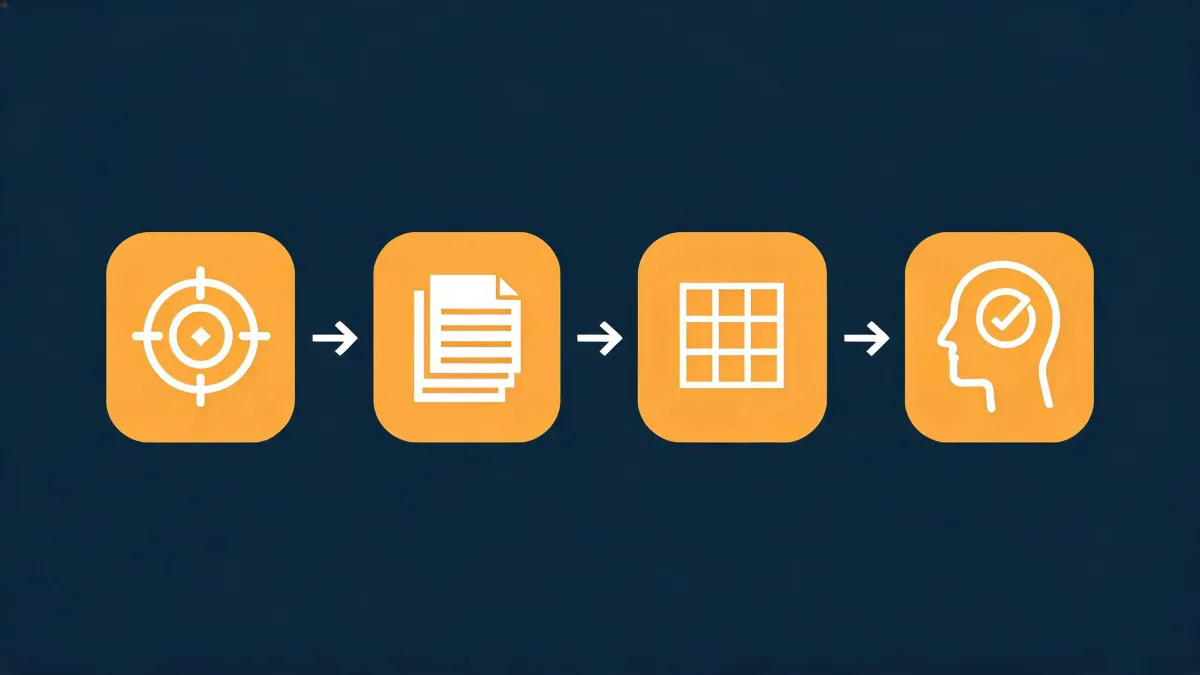
So I evaluated both tools on four dimensions:
- Sales prospecting features—what reps actually touch every day
- API data enrichment—how much of our existing data stack we could consolidate
- Total cost of ownership—license fees plus the costs below the waterline
- Total addressable market fit—whether each tool matched the size and shape of our prospect universe
The fourth dimension surprised me the most, and it's where the recommendation gets counterintuitive. But first, features.
Dimension 1: Sales prospecting features
Both tools handle parallel dialing well—that's table stakes now. The interesting question is what happens after a call connects.
Frontspin is a focused power dialer. It does exactly what it promises: high call volume, local presence, reliable disposition logging, clean interface. Our mid-level SDR was comfortable after one session.
Nooks runs the same parallel dialing engine, but adds an AI layer that listens during live calls and surfaces talk tracks, objection responses, and next-best questions in real time. It also automates the busywork (auto-logging, automatic next-number routing) that quietly eats 15–20 minutes of every calling hour.
I'll be honest: I was skeptical during the first demo. AI coaching sounds like something that belongs in a pitch deck, not in my SDR's ear. But the online Nooks AI reviews matched what I saw in the pilot—reps actually using the prompts.
“It's like having a senior AE whispering in my ear,” one four-year SDR veteran told me.
That was not what I expected to hear. I initially assumed “parallel dialer” meant the same experience across vendors. Didn't verify. Turns out the implementations are meaningfully different.
There's a trade-off, though. More capability means more configuration. Nooks took about five days to implement. Frontspin was live in two.
My conclusion: If your team needs more call volume from experienced reps, Frontspin is the cleaner pick. If reps need conversational guidance or your new SDRs take a long time to ramp, Nooks has the edge.
Dimension 2: API data enrichment—what it is and when your team needs it
Let me explain API data enrichment the same way I explained it to our finance team. It's what happens when your prospecting tool automatically pulls fresh firmographic and technographic data from third-party sources (i.e., Clearbit, ZoomInfo, 6sense) and appends it to your CRM records. No rep juggling six browser tabs. No stale account lists. The data just appears.
When does a B2B sales team need this? It depends on your motion. If you're working a curated list of 500 accounts, manual research is fine—your reps know those accounts and can verify changes themselves. But if you're running high-volume prospecting (which is the point of a parallel dialer), manual enrichment becomes a bottleneck. I calculated our reps were losing roughly 30–45 minutes per day context-switching between research tabs before a call block.
Frontspin connects to your existing data stack. If you already use ZoomInfo or Sales Navigator, you can feed that data into the dialer and call effectively. It's workable—it just means maintaining a separate data subscription and dealing with hygiene issues between systems.
Nooks ships with data enrichment and intent data integrated. During the pilot, reps could see when a prospect's account was actively showing buying signals. That changed which accounts they called and when. It's the difference between grinding down a static list and calling the accounts that are signaling interest this week.
My conclusion: If your data stack is already solid, Frontspin's integration approach won't hold you back. If you'd rather consolidate enrichment into one system, Nooks' integrated model made more sense when I mapped out renewals.
Dimension 3: Total cost of ownership
Quick disclaimer: pricing varies by seat count, contract term, and feature package. As of January 2025, both tools sat in the same general price range; verify current rates before you build your budget.
Beyond the license fee, I considered:
- Implementation. Frontspin: around 2 days. Nooks: around 5, mostly because the AI prompts and data integrations needed tuning to our playbooks.
- Training. Frontspin needed one 45-minute session. Nooks needed two 90-minute sessions plus a calibration period. Not a deal-breaker, but it's real SDR time.
- Consolidation. Because Nooks includes data enrichment, we could cancel one of three data subscriptions we were paying for. That moved the TCO math noticeably.
- Admin overhead. I manage vendor relationships for a living (not the sexiest line item, but it's real). Fewer vendors mean fewer renewals, fewer security reviews, fewer invoices.
When I modeled TCO over 24 months, the sticker-price gap between the two tools shrank dramatically. In our scenario, the Nooks option actually won on total cost—not because the license was cheaper, but because it replaced two other subscriptions.
The upside was consolidation. The risk was disrupting an outbound team that was already hitting its call metrics. I kept asking myself: is the efficiency gain worth two weeks of transition friction? In the end, I mapped the transition week against the SDR calendar, and the answer was yes.
Dimension 4: Total addressable market fit (the counterintuitive part)
Total addressable market (TAM) gets thrown around a lot in B2B, so let's make it concrete. TAM is the full universe of accounts that could potentially buy your product. If you sell a general collaboration tool, your TAM could be millions of companies globally. If you sell specialized software to maritime law firms in Singapore, your TAM is a short list.
Why did TAM matter for a dialer comparison? Because it defines the sales motion:
- Large TAM (tens of thousands or more): Volume is the only viable play. You need parallel dialing, automated enrichment, and AI assistance to keep reps effective across hundreds of repetitive conversations. Nooks was built for this world.
- Small TAM (hundreds to low thousands): Every account is precious and deserves a tailored approach. A simpler power dialer like Frontspin—combined with the sales intelligence tools you already trust—gets the job done at a lower cost.
Our TAM analysis showed roughly 84,000 addressable accounts across North America and Europe. At that scale, AI-assisted calling and the consolidated data stack had measurable ROI. But here's the surprise: if our TAM had been 2,000 accounts, I would have recommended Frontspin over Nooks without hesitation.
(A tool being “better” is not a universal fact. It depends on the motion you're running.)
Which should you choose?
Choose Nooks if:
- Your total addressable market is large and your prospecting is high-volume
- Reps need real-time guidance on calls, or SDR ramp-up is slow
- You want dialer, data enrichment, and intent data under one subscription
- You can absorb a longer implementation for better AI calibration
Choose Frontspin if:
- Your TAM is smaller and reps know exactly who to call each day
- You already have a mature data stack and are satisfied with it
- Your team prefers minimal AI layering on calls
- You need a fast, low-friction rollout with minimal training
In the end, I bought Nooks—but I still think Frontspin is the right answer for a meaningful slice of B2B teams. The “best tool” label is situational.
The bottom line
Looking back, I should have looped the SDR team into demos from day one. At the time, I wanted to shortlist options before pulling reps off their pipeline. That hesitation cost us about a week, and they flagged requirements I hadn't considered (surprise, surprise—the team that uses the tool every day had useful opinions).
But the process made one thing clear: comparing Frontspin vs Nooks isn't about matching feature checklists. It's about understanding your TAM, mapping total cost over 24 months, and being honest about whether your reps will embrace AI call guidance or find it intrusive. Gartner projected that 60% of B2B sales organizations would shift from experience-based to data-driven selling by 2025 (Source: Gartner, gartner.com). Our pilot suggests that shift is real—if the tool fits the motion.
If you're on the fence, run a two-week pilot with both tools. Use your own data, your own reps, your own playbooks. Calculate your TAM first, then measure what each tool does to your cost per meeting.
Take it from someone who's purchased $1.2M of software across 40+ vendors: the right comparison starts with your own numbers, not the vendor's scorecard.
Pricing is for general reference as of January 2025; verify current rates with each vendor. This article reflects my personal evaluation experience and is not an endorsement based on any current promotional terms.