
The Surface Problem: More Leads, Less Signal
I'm not an SDR. I'm the operations and procurement person who buys the tools your SDR team complains about. At my company, a 180-person B2B software firm, I manage about $140,000 in annual sales-tool spend across 11 vendors. I see the invoices, the renewals, and the usage reports. I also hear the same sentence every quarter: the leads are bad.
For a while, I believed it. We bought another lead generation software subscription. We added more contacts. We ran more sales email sequences. The dashboard showed more sends. The pipeline didn't show more qualified meetings.
More leads. Less signal.
Why does adding another lead source make the pipeline noisier? That question is where the real problem starts.
The Deeper Problem: Lead Generation Is Treated as a Product, Not a Step
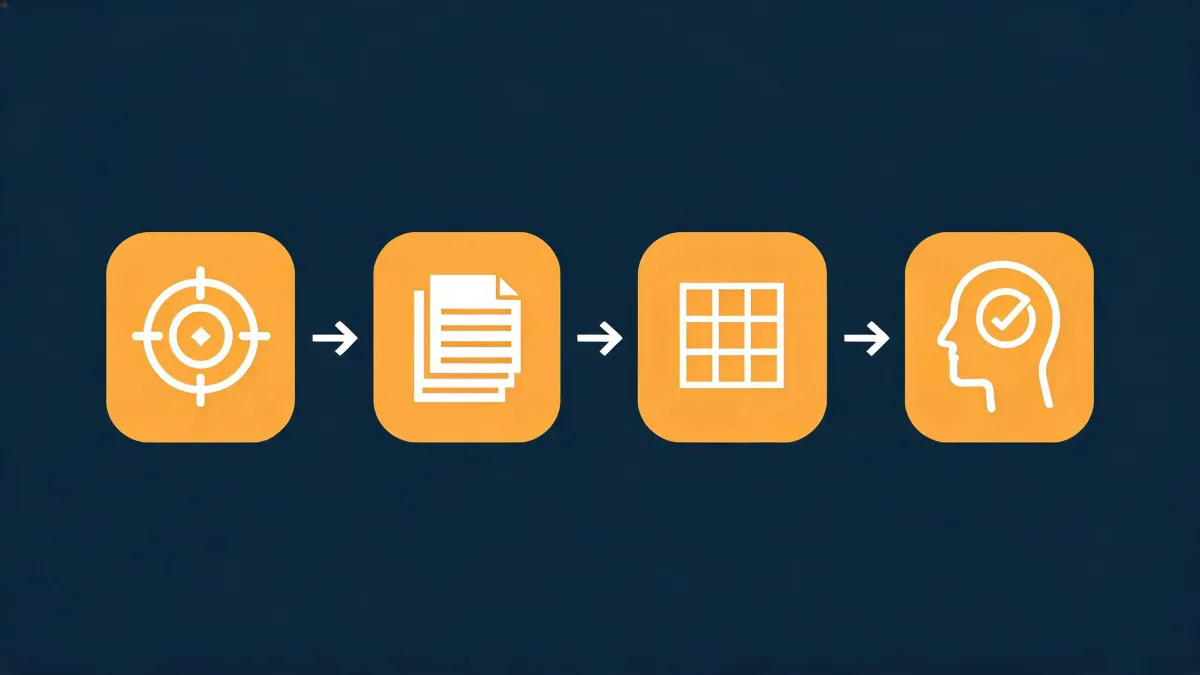
Here's the thing: lead generation isn't a product you buy and hand to a rep. It's a chain of decisions. Define the ICP. Source accounts. Enrich contacts. Verify emails. Score intent. Personalize. Send. Route replies. Sync the CRM. Learn from what happened.
If any link breaks, the cost doesn't disappear. It moves to the SDR team. They clean bounce-backs. They fix missing fields. They guess whether a contact still works at the company. They rewrite generic emails because the personalization data was thin.
The old thinking was simple: buy a list, load it into a sequencer, blast. That was already risky ten years ago when inbox providers were less strict and buyers had more patience. Today, it's a compliance and deliverability problem, not just a data problem. Per Google and Yahoo's bulk sender requirements effective February 2024, bulk senders need authentication, easy unsubscribe, and low spam complaint rates. GDPR has been effective since May 25, 2018. CAN-SPAM has been effective since January 1, 2004. Verify current requirements at official sources, because the rules are not static.
I learned this the hard way. They warned me about cheap enrichment. I didn't listen. I approved a lower annual contract for a raw contact database because the per-seat price looked good. Six weeks later, my finance lead asked why SDR capacity had dropped. The team was spending hours cleaning bounce-backs and repairing CRM fields. That was on me.
When I compared two vendors side by side—one raw list plus a separate verifier, one integrated workflow with waterfall enrichment and intent data—I finally understood why the details matter so much. Same CRM. Same ICP. Different handoffs. The integrated workflow didn't just produce more records. It produced fewer dead ends.
The Cost Nobody Puts in the Quote
This is where total cost thinking matters. The quote shows the subscription price. The real cost includes the stuff around it:
- Enrichment credits that run out before the month does
- Verification overages and manual list cleaning
- SDR hours spent on data hygiene instead of conversations
- CRM cleanup and reporting errors
- Deliverability risk when bad addresses hit the sales email domain
- Compliance review for regional outreach
- Overlapping tools that do 60% of the same job
A low per-seat price can still create a high total cost. I've seen it. A tool that saves $2,000 a year on licensing but costs the SDR team five hours a week is not cheap. It's expensive with better branding.
Part of me wants the simplest possible stack. One vendor, one invoice, one login. Another part knows that consolidation without workflow design just hides the problem. I compromise by mapping every handoff before I renew anything.
What an Agent-Native Prospecting Workflow Actually Looks Like
How does lead generation fit into an agent-native prospecting workflow? It stops being a separate purchase. It becomes the input layer.
In practice, that looks like a loop:
- Define the ICP and account signals.
- Source accounts and contacts from multiple data sources.
- Run waterfall enrichment to fill gaps instead of accepting blanks.
- Use intent data to prioritize who gets attention now.
- Run okki-go email verification before the sales email is sent, not after it bounces.
- Let agents draft research and outreach, but keep a human in the loop for approval and edits.
- Sync replies, meetings, and CRM outcomes back into targeting.
That last step is the one most teams skip. If the workflow doesn't learn from replies and opportunities, every campaign starts from zero. An OKKI GO workflow for SDR teams is useful because it treats verification, enrichment, and outreach as connected steps. The OKKI GO email verification step is not a checkbox at the end. It's a gate before send. The okkigo approach I've evaluated treats the workflow as the product: source, enrich, verify, prioritize, draft, approve, sync.
I have mixed feelings about agent-native prospecting. On one hand, agents can scale research and reduce manual clicks. On the other, scale without judgment creates generic outreach faster. The reconciliation is human-in-the-loop. Agents handle the repetitive work. Humans own the message and the relationship.
How I'd Buy Lead Generation Software Now
I'd start with the workflow, not the tool. Before a demo, I'd ask three questions:
- Where does this fit between our CRM, enrichment, verification, and sequencer?
- What happens when a record is incomplete, stale, or risky?
- Who owns the handoff when the data is wrong?
Then I'd run a small pilot. Give the vendor 50 to 100 records you already know. Check match rates, email accuracy, intent signals, and CRM sync. Ask how their verification works and what they do when confidence is low. No tool should promise 100% accuracy. Good vendors tell you the limits.
Finally, calculate total cost. Include license fees, credits, overages, SDR time, and cleanup. If the cheaper option adds one hour of manual work per rep per day, it isn't cheaper.
The Shift That Matters
The surface problem is bad data. The deeper problem is a disconnected workflow. Lead generation software doesn't fail because it can't find names. It fails when it sits beside the SDR process instead of inside it.
Agent-native prospecting is not about removing people. It's about removing dead ends. That's the version of lead generation I'd approve now. Fewer exports. Fewer handoffs. More signal.