
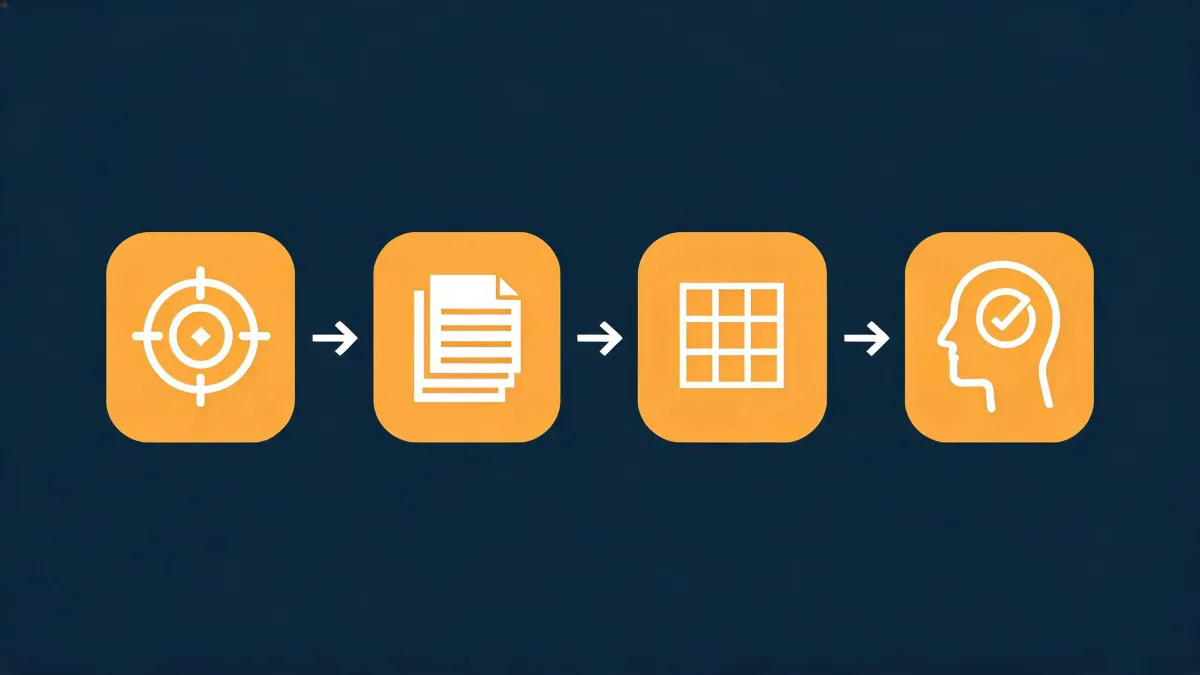
Okki-go works by linking LinkedIn Sales Navigator, a company data API, and AI SDR agents into one workflow with a human approval step at the end. That workflow is exactly what makes it an AI sales engagement platform instead of just another scraper. If you are searching how does okki go work, the plain-English answer is this: it handles research and first drafts; a human handles the send.
I am the office administrator for a 40-person B2B SaaS company. I manage our software and services purchasing—roughly $120k per year, across 15 vendors—and report to operations and finance. When our sales director asked me to evaluate okki-go, I went in skeptical. The word scraper makes any buyer nervous.
So here is my straight conclusion: Okki-go is not a data trick. It is an agent-native prospecting workflow. The okki-go install command is just the connection point. If you understand that, the rest of the product makes sense.
What the okki-go install command actually does
The okki-go install command requires a terminal, which is already a red flag to most nontechnical buyers. If I remember correctly, our engineer ran a command similar to npm install -g @okkigo/cli && okkigo login. But that command is tied to a workspace, so do not copy it from a blog post. Use the one from the official docs.
Once installed, the CLI connects okki-go to your CRM and email flow. It gives the AI agents permission to read data and draft messages, but not to send anything without approval. That separation is more important than any install detail.
Okki-go in three steps
- It pulls target accounts from LinkedIn Sales Navigator, a CRM list, or a CSV.
- It enriches each account through a company data API using waterfall enrichment—checking several data sources instead of trusting one.
- It drafts a tailored first message and sends it to an SDR for review before sending.
Waterfall enrichment sounds like jargon. What it means is practical: no single vendor has complete data on every company. When one source doesn't know a hiring signal, another might. Okki-go checks them in sequence, so your SDR spends less time correcting bad data.
Where the LinkedIn Sales Navigator scraper fits
A scraper alone gives you a CSV. That is it. In an agent-native workflow, the scraper is only the front door.
Here is how it works in practice:
- An SDR saves a targeted list of accounts in LinkedIn Sales Navigator.
- Okki-go imports the list through the LinkedIn Sales Navigator scraper.
- The company data API adds firmographics, tech stack, intent data, and recent buyer signals.
- An AI agent researches the account and writes a specific first line for the rep.
- The rep edits, approves, and sends.
Why does this order matter? Because it does not just collect names. It gives the rep a reason to call. That is the difference between prospecting and noise.
The part that surprised me
When I looked at our prospecting process next to okki-go, I learned that list size wasn't the bottleneck. Context was. Instead of an SDR spending ten minutes looking for a reason to contact a company, the reason was already in the research note.
I also have a buyer scar with a different data tool. I knew I should test a sample before paying, but thought, what are the odds the emails are bad? The odds caught up with me when nearly half of our test list bounced. That experience is why I care about enrichment quality more than database size.
(Should mention: no tool can guarantee 100% email accuracy. Anyone who promises that is not being honest with you.)
What I ask before buying an AI sales engagement platform
I have learned to ask what is not included before I ask the price. The vendor who lists setup fees and usage limits upfront—even if the total looks higher—usually costs less in the long run.
- How many contacts actually get enriched after the scraper pulls them?
- What happens when company data API credits run out?
- Can Sales Navigator be connected by an SDR, or does it require admin access?
- Can we export our data if we cancel?
Okki-go gave clear answers to all four. Oh, and it did not hide the limits of the AI. That honesty carried more weight than any feature demo.
Where okki-go still needs a human
Okki-go works best as a co-pilot, not a replacement. If your SDR team expects AI to send messages with zero review, this platform will frustrate you. Human-in-the-loop is not a flaw; it is the model.
It also assumes you have a defined ideal customer profile. If you are selling to anyone with a pulse, no scraped list or intent signal can save you.
And yes, the okki-go install command changes over time. So does the data API. Check the official docs to verify the current steps.
Bottom line
The LinkedIn Sales Navigator scraper starts the list. The company data API gives it context. The AI agents write the first draft. The human makes the final decision. That is the agent-native prospecting workflow okki-go fits into, and probably the clearest answer to how does okki go work.