
-
The question we started with
-
The surface problem: we treated contact data like a purchase order
-
Deep cause 1: verification is not deliverability
-
Deep cause 2: enrichment without freshness is just polished stale data
-
Deep cause 3: intent data is context, not qualification
-
Deep cause 4: Okki Go is a skill, not a fix
-
What bad data actually costs
-
What RevOps teams should evaluate in a B2B contact data platform
-
The prevention habit that actually stuck
The question we started with
I run quality and compliance for a B2B SaaS revenue operations team. I review every contact dataset before it goes into our outbound stack—roughly 40 lists a quarter, about 200 unique files a year. In 2024, I rejected about 18% of first deliveries because of stale titles, duplicate accounts, missing suppression flags, or verification timestamps older than six months.
So when someone on our SDR team asked, Is Okki Go a sales prospecting skill? I did not answer right away. The honest answer depends on what you expect it to do. If you expect a database that solves outbound, no. If you expect an agent-native workflow that can enrich, verify, and route contacts with human review, maybe. That distinction matters more than the label.
Our surface problem looked simple. We needed more contacts, better enrichment, a cleaner email verification API, and intent data that actually worked. The team had three vendors in trial. Every pitch sounded similar. Okki Go contact enrichment was one option. We tested it. The first pilot looked good. Then replies did not improve. That’s when the real problem showed up.
The surface problem: we treated contact data like a purchase order
Most teams evaluate a B2B contact data platform like they evaluate office supplies. How many contacts? What is the match rate? What is the price per record? Can we get an API? Does it sync to CRM?
Those are fair questions. They are also incomplete. We asked them, got decent answers, and still had bad outreach. The email verification api documentation looked fine. The intent data how it works diagram made sense. The coverage numbers were strong. Yet SDRs were still sending to wrong titles, old roles, and people who had opted out two quarters earlier.
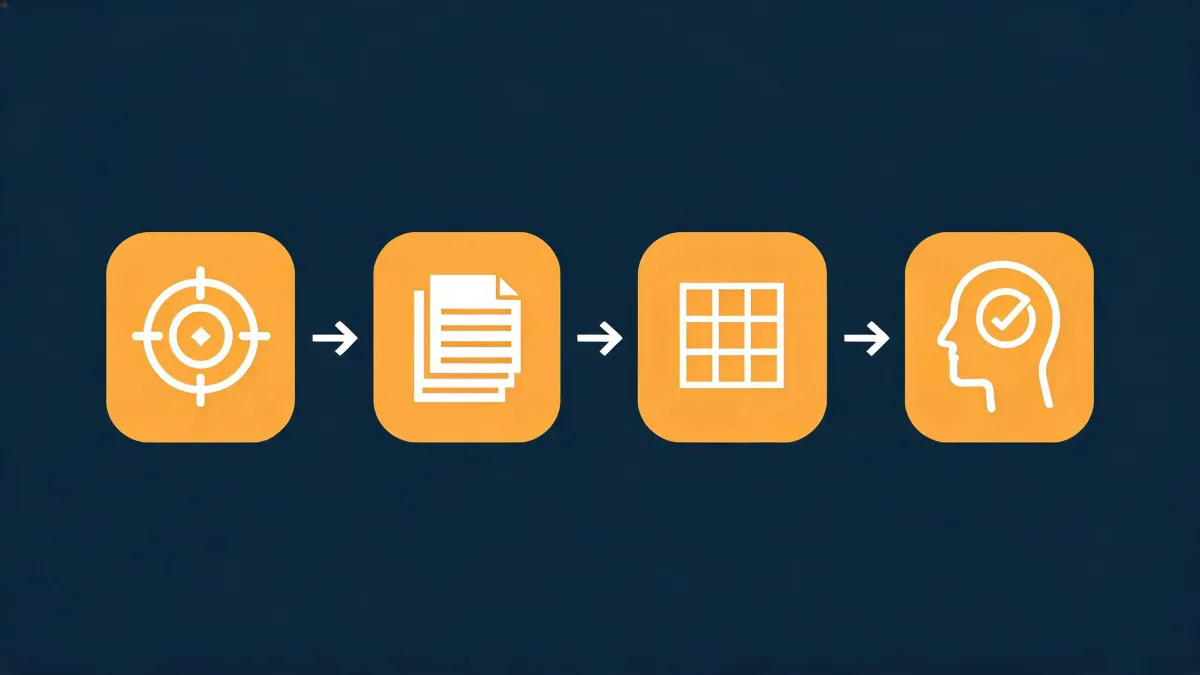
Why? Because outbound contact data is not a single purchase. It is a supply chain. Source, enrichment, verification, intent, suppression, routing, sequencing. Every step has its own failure mode. If you only inspect the final list, you are inspecting the last mile of a much longer road.
Deep cause 1: verification is not deliverability
This is the rookie mistake I still see. In my first year, I made the classic verification error: assumed a 98% verified email rate meant 98% deliverability. Cost us a burned subdomain and two weeks of repair.
An email verification API can tell you syntax, domain, MX record, and sometimes whether a mailbox is likely to exist. It cannot tell you whether the person will recognize your brand, whether they opted out, whether the email is a role account, or whether your sending domain has a bad reputation.
According to Google's Email Sender Guidelines, spam complaint rates should stay below 0.10% and ideally below 0.05%. A list can be technically verified and still push you over that line if the audience is wrong or the send is too aggressive. That is not a data problem. It is a process problem.
Deep cause 2: enrichment without freshness is just polished stale data
Okki Go contact enrichment may pull from multiple sources. That’s useful. Waterfall enrichment is one of the few real advantages in this category. But if the last-verified date is old, the match rate is a vanity metric.
We didn't have formal pre-upload QA. Cost us when a list with 12% duplicates and old titles hit sequences during a product launch. The vendor reported a 91% match rate. What they did not show was that 40% of the matched emails had not been verified in over a year. We caught it after 1,800 sends. Bounce rate was 6.2%. Not catastrophic. Still expensive. We paused the campaign, cleaned the CRM, and spent two weeks repairing domain reputation.
To be fair, cheaper data can work for low-stakes campaigns. But for outbound that touches your primary domain, freshness and consent flags matter.
Deep cause 3: intent data is context, not qualification
Intent data how it works is often described like a scoreboard. Someone visits a pricing page, downloads a report, or reads a review. A vendor assigns a score. Sales gets a list.
That is useful context. It is not a buying signal by itself. Intent decays. It is noisy. It can reflect research, competitive checking, or a student writing a paper. If you route intent data straight into sequences without human review, you get confident outreach to the wrong people.
The numbers said go with the cheaper provider with the highest match rate. My gut said no because their last-verified dates were 14 months old. We went with the smaller vendor with lower match rate but fresher data. Bounce rate dropped. That gut check was not magic. It was a quality habit.
Deep cause 4: Okki Go is a skill, not a fix
So is Okki Go a sales prospecting skill? I would say yes, but with a caveat. It is not a magic database. It is closer to an agent-native prospecting skill: it can help orchestrate enrichment, verification, and intent signals inside a workflow. If you pair it with human-in-the-loop outreach, it can reduce manual steps. It does not replace a defined ICP, suppression logic, or QA gates.
If you are evaluating okki-go contact enrichment, ask what it does when sources disagree. Does it show source lineage? Does it respect your suppression list? Can you export the confidence score and last-verified timestamp? Those questions matter more than a demo match rate.
What bad data actually costs
Bad contact data is expensive in four places:
- SDR time. Reps spend hours on bad emails, wrong titles, and duplicate accounts. That is pipeline that never gets built.
- Domain reputation. High bounce rates and spam complaints can damage the domains you use for real customer communication.
- CRM trust. Dirty records create bad routing, broken reporting, and forecasts that look precise but are wrong.
- Compliance risk. Under GDPR, you need a lawful basis for processing personal data. The FTC's CAN-SPAM Act compliance guide requires accurate routing information, a clear opt-out, and a physical address. A good enrichment tool does not remove those obligations.
That is the cost of skipping prevention. Five minutes of verification beats five days of correction.
What RevOps teams should evaluate in a B2B contact data platform
After the burned subdomain, I created a 12-point checklist. It is not glamorous. It is cheaper than rework. Here is the short version:
- Coverage by segment. Match rate by region, industry, seniority, and company size—not one blended number.
- Freshness. Last-verified dates, not just verification status.
- Waterfall logic. Which sources are used, in what order, and what happens when they disagree.
- Email verification API documentation. Rate limits, webhooks, confidence scores, catch-all handling, and error codes.
- Intent data provenance. Source, recency, decay model, and how it maps to your ICP.
- Compliance workflow. Suppression sync, opt-out handling, and lawful basis documentation.
- Human-in-the-loop QA. Sample reviews, bounce monitoring, and domain health alerts.
- CRM sync. Duplicate rules, field mapping, and owner assignment.
- Pilot design. Run a holdout. Compare bounce rate, reply quality, and meeting acceptance—not just match rate.
Okki Go can be part of that stack if it supports agent-native prospecting, waterfall enrichment with intent, and human review. But no platform fixes a missing process. The tool is the easy part.
The prevention habit that actually stuck
We now require three checks before any list goes live: a 2% random sample review, a suppression-list match, and a domain reputation check. It adds about 20 minutes per campaign. In Q1 2024, we caught a duplicate issue that would have hit 4,000 records. The fix took one hour. Without the check, it would have taken days.
I get why teams want a single answer. A new platform, a better API, an intent score. Simple. But the data supply chain is where quality is won or lost.
This was accurate as of Q2 2025. Email verification and intent data vendors change features, pricing, and API limits often. Verify current documentation and policies before you commit.