
-
Why this isn't 'vendor A vs. vendor B'
-
Dimension 1: Data and intent signals—freshness matters more than volume
-
Dimension 2: Connection efficiency vs. conversation quality
-
Dimension 3: Compliance and brand safety—the verdict that surprises people
-
Dimension 4: Total cost of ownership—the hidden number
-
So should you choose nooks or a traditional stack?
I review sales-tech deliverables for a living, and my background is quality control, not sales. So when my RevOps team asked me to help evaluate sales intelligence platforms, I brought a slightly different lens: I didn't care which demo looked shiniest. I wanted to know what breaks at scale.
The comparison that keeps coming up is nooks versus the traditional lead-gen stack—the bundle of databases, autodialers, and enrichment tools your SDRs are probably using right now. It's not a feature battle. It's an integrated AI sales rep platform vs. a set of point tools. That's exactly why the choice is confusing. You're comparing apples to a fruit salad.
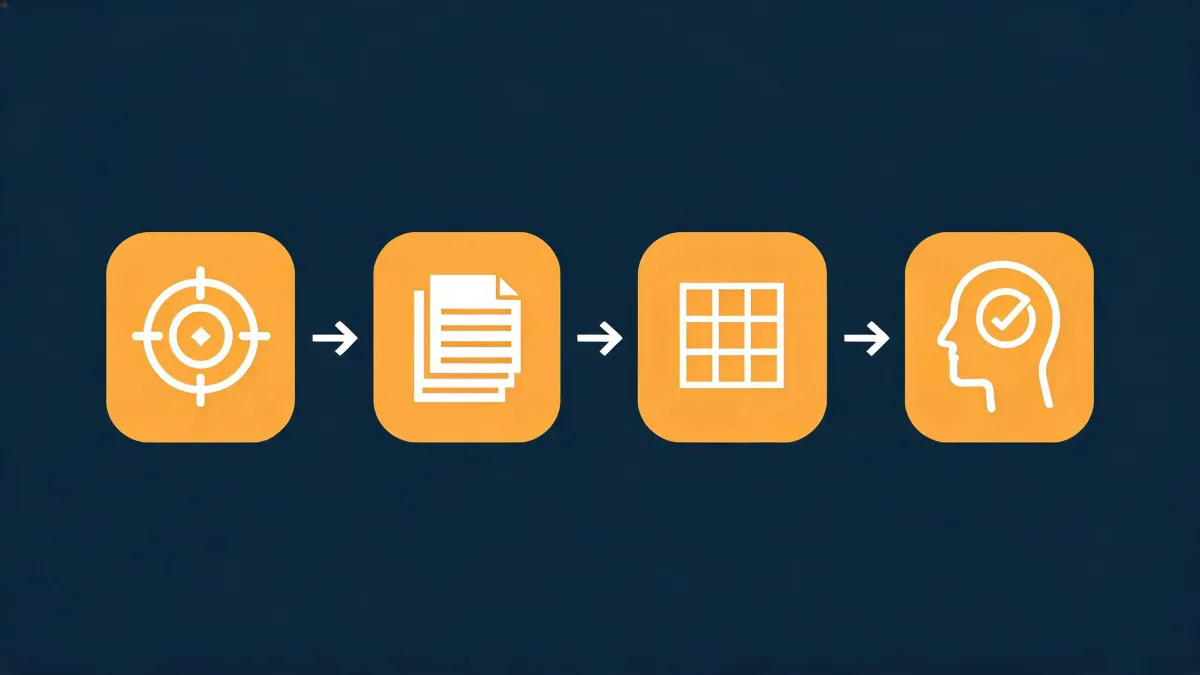
If you're a revenue operations lead, here's the framework I use for sales intelligence platform features: data freshness, connection efficiency, compliance and brand safety, and total cost of ownership. Those are the dimensions that change your workflow, and they're not always on the vendor comparison page.
Why this isn't 'vendor A vs. vendor B'
At the surface, comparing a lead gen tool to nooks looks straightforward: one gives you contacts, the other gives you calls. But a lead gen tool is a data source. Nooks is a workflow—data, connection, and follow-up in one environment. Traditional tools need to be stitched together with rules, scripts, and a lot of manual CRM updating.
I'm not saying the old way is bad. For a small team with a very specific account list, it can be the right call. But the evaluation criteria are different. You're not comparing rows of database fields. You're comparing operating systems.
Dimension 1: Data and intent signals—freshness matters more than volume
In 2020, buying a list from a data vendor was standard practice. You imported a CSV into your CRM, enriched it when you got a bounce, and moved on. If you were lucky, the data was 70% accurate on day one. By month six, that number had dropped—especially for B2B contacts who change jobs faster than most CRM workflows update.
Nooks takes a different approach. It has data enrichment and intent data built into the platform. Instead of a static snapshot, you get signals: who's looking, who's hiring, which accounts are showing buying behavior. That doesn't mean every record is perfect. But the system was designed for freshness, not shelf life.
My verdict: if stale lists are your biggest pain, the integrated model wins. At least, that's been my experience evaluating data quality in 2024—and I should note that source quality still varies by industry. Healthcare data is messier than SaaS, in my experience.
Dimension 2: Connection efficiency vs. conversation quality
Here's where things get interesting. A traditional autodialer lets an SDR manually dial a number and wait. If you're good, you make 30 calls per hour. If you're average, maybe 20. Nooks' parallel dialer, on the other hand, dials multiple numbers at once and routes only answered calls to a live SDR. That's a meaningful difference.
This is also where the nooks extension and local presence for SDRs come in. The browser extension gives SDRs local area codes, so a call to a Dallas prospect appears from a 214 number, not an 800 line. It's a small quality cue, but in cold outreach it can help pickup. It doesn't guarantee a connect rate—nobody honest should promise that—but it removes a minor objection.
The counterintuitive part: more connections don't automatically mean better outcomes. In a quality audit, I'd rather see 15 well-prepared conversations than 50 voice mails followed by half-hearted follow-ups. That's why the human-in-the-loop model matters. Nooks can screen calls, transcribe, and label outcomes, but a human should still review intent before the next step. Skip that quality gate, and parallel dialing just multiplies bad patterns.
Dimension 3: Compliance and brand safety—the verdict that surprises people
Most people assume the slower, manual way is safer from a regulatory standpoint. I'm not sure that's true. Manual dialing means fewer complaints, but it also means less oversight. If an SDR is tired and skips the opt-out list, that's a manual error—and it can still create regulatory exposure.
Automation changes the scale of mistakes. If your dialer accidentally re-calls a number that asked to be removed, it's not one violation; it's hundreds. So as you evaluate sales intelligence platform features, look for compliance guardrails: do-not-call list syncing, frequency caps, opt-out enforcement, and clear data-use licensing.
I also check the fine print. Per FTC guidelines (ftc.gov), claims like 'guaranteed reply rates' require substantiation—if a vendor can't provide it, that's a red flag. A trustworthy platform will talk about improving efficiency, not promising specific outcomes.
The counterintuitive takeaway: neither traditional tools nor AI platforms are inherently compliant. The risk shifts from human error to system configuration. That's why your evaluation needs a compliance checklist, not just feature checkboxes.
Dimension 4: Total cost of ownership—the hidden number
On paper, traditional tools look cheaper. Your current stack—data provider, autodialer, LinkedIn automation, email sequence tool—might cost $1,500 per user per year. Nooks is a bigger upfront line item. But the math gets cloudier when you add integration and admin time.
In our Q1 2024 audit, we counted the hours our RevOps team spent syncing five different tools and fixing broken fields in the CRM. If I remember correctly, it came out to about two days per month. Those hours aren't on the vendor invoice, but they're real costs. An integrated platform doesn't eliminate all of that, but it removes the integration layer.
There's a risk-weighing moment here. The upside of switching was one predictable bill. The risk was a disruptive change in the middle of quota season. I kept asking myself: is the efficiency gain worth potentially confusing a fully ramped SDR team?
The answer, for us, was to run a pilot with one team first. We didn't switch the whole department. That pilot produced a modest increase in booked meetings, but the more meaningful result was that the quality of follow-up notes improved. There's something satisfying about seeing a cleaner CRM after all the spreadsheet chaos (note to self: we should have run this pilot a year earlier).
So should you choose nooks or a traditional stack?
Here's my practical advice.
Choose a traditional stack if your outbound volume is low, your team is extremely small, your processes are heavily customized, or you have the in-house skills to maintain integrations. It's not obsolete; it just moves slower. And slow can be exactly what you need if your key accounts require careful, account-based messaging.
Choose an AI sales rep platform like nooks if you want to scale outbound without adding headcount, you need fresher data and intent signals, and you're willing to invest in quality review workflows. Don't buy it expecting to set it and forget it. Without human review, you'll get scale without taste—and that's a bad trade.
The fundamentals haven't changed: reach the right person, say something relevant, follow up consistently. What changed by 2025 is the execution. AI sales rep platforms can handle the repetitive work, but the quality bar still rests with your team. Treat the platform as a tool, not a hero.
If you're in the middle of an evaluation, my last piece of advice is this: build a quality checklist before you look at a demo. Include data source validation, compliance controls, integration scope, and internal review process. Then compare vendors against that list—not against their pitch deck.