
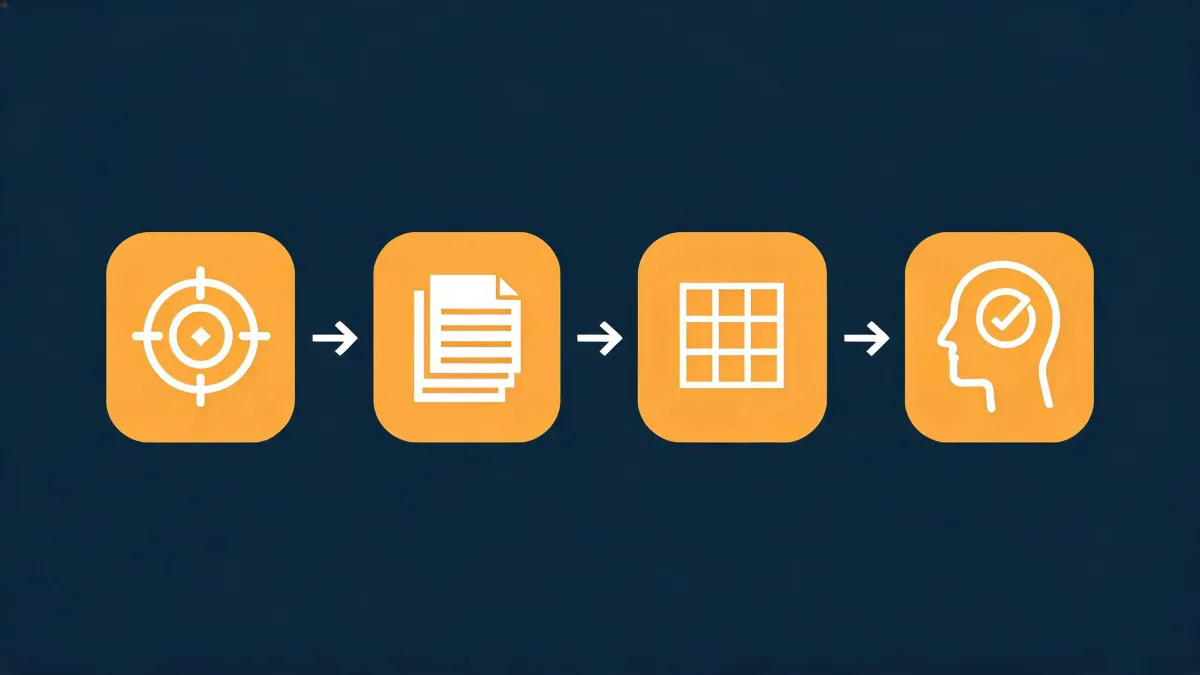
The short answer: evaluate verified reachable-ICP coverage, not database size
If you want the conclusion first: the lead enrichment metric that matters is verified reachable-ICP coverage per completed sequence, not total contacts or per-credit price. In my last audit, the smaller upfront quote looked 18% lower per credit. After bounce cleanup, fallback research, API overages, and rep rework, its total cost was 34% higher. That is the number I take to finance.
So what should revenue operations teams evaluate in lead enrichment? Six things: ICP match rate, waterfall coverage, intent freshness, compliance audit trail, total cost of ownership, and human-in-the-loop workflow. Everything else is basically a demo feature.
Why I use TCO, not list price
I am a procurement manager at a 240-person B2B SaaS company. I have managed our GTM data and outbound tooling budget, about $180,000 annually, for five years. I have negotiated with 14+ vendors and documented every order in our cost tracking system. My job is not to pick the most exciting tool. It is to make sure we do not pay twice for the same bad data.
When I audited our 2023 spending, we had four tools doing overlapping enrichment. The dashboards said coverage was 92%. The SDR team said half their sequences hit dead ends. That gap is the whole problem.
The question everyone asks is, 'What is your database size?' The question they should ask is, 'What happens when your first data source misses?'
The numbers said consolidate on the biggest database. My gut said no. We piloted two smaller workflows instead. The bigger database looked better in a demo, but 60 days later, job-change data had decayed and we were re-verifying 28% of records. The demo measured match rate at import. Production measured match rate at send time. Those are not the same number.
What RevOps should evaluate in lead enrichment
1. ICP match rate, not total contacts
Ask for match rate against your actual closed-won ICP, not a generic persona. A vendor can have 300 million contacts and still miss your 2,000 ideal accounts. Run a sample of 500 records from your CRM. Measure how many come back with a deliverable email, correct title, correct company, and a reason to reach out now.
If the vendor cannot run that sample without a six-week onboarding project, that is a red flag. Not a deal-breaker, but a red flag.
2. Waterfall coverage and fallback logic
Waterfall enrichment plus intent is not a buzzword. It is a risk control. You want a system that checks source A, then source B, then source C, and tells you which source won. Why does that matter? Because single-source enrichment fails silently. You get a record. It looks complete. Then it bounces.
For B2B lead generation, ask: When the first provider misses, does the platform automatically try another? Can you set the order by region, industry, or domain? Can you see the source lineage in the CRM? If not, your reps become the waterfall. That is expensive.
3. Intent freshness and actionability
Intent data decays fast. A company researching a CRM migration 90 days ago is not the same buyer today. Ask how often signals refresh, what topics are tracked, and whether you can filter by recency. The best intent signal is one that changes a sequence step, not one that fills a dashboard.
Then again, intent is not magic. For low-ACV products, expensive intent data may never pay back. For niche enterprise segments, a human researcher may beat any algorithm. Know your math before you buy.
4. Compliance and audit trail
This is where procurement gets nervous. If you sell into the EU, GDPR Article 6 matters. If you do outbound in the US, CAN-SPAM matters. If you touch California residents, CCPA and CPRA matter. Ask the vendor: Can you export consent records, legitimate-interest assessments, and opt-out history? Can you show where each field came from?
Also remember that email verification is not a promise. SMTP validation cannot reliably confirm catch-all domains because the server accepts all recipients. See RFC 5321 for how SMTP works. A verifier can reduce bounces. It cannot promise perfect deliverability. If a vendor says otherwise, walk away.
5. Total cost of ownership
This is my lane. I built a cost calculator after getting burned on hidden fees twice. The line items that surprise RevOps teams are usually:
- Credit expiry and rollover rules
- API access or connector fees
- Premium intent or technographic add-ons
- Verification overage charges
- Seat minimums for admins
- Implementation and data migration time
- Manual fallback labor when enrichment misses
In Q2 2024, I compared two vendors for a $22,000 annual contract. One quoted $18,000 all-in. The other quoted $14,000 base. The lower base price added $2,500 for API, $1,800 for premium intent, $1,200 for verification overage, and roughly $3,000 in admin time. Total: $22,500. The all-in quote was not the smallest upfront number. It was the lower TCO. That is a 25% difference hidden in fine print.
Bottom line: ask for a 12-month TCO worksheet. If they will not provide one, build it yourself with your actual sequence volume.
6. Human-in-the-loop workflow
Agent-native prospecting sounds great until you realize nobody wants an AI to email 10,000 strangers without review. Human-in-the-loop outreach means the agent does the research, enrichment, and drafting, but a human approves the edge cases. That is the version RevOps can defend in a board meeting.
For GTM engineers, this is the integration question: Can the system push enriched records to Salesforce or HubSpot? Can it trigger sequences in Outreach or Salesloft? Can it pause when a reply comes in? Can it log every enrichment source? If the answer is no, you are buying a list, not a workflow.
Where okki-go fits for GTM engineers
If you are evaluating okki-go, often written okki go, treat it like any other vendor in this framework. The public positioning of okki go features centers on agent-native prospecting, waterfall enrichment plus intent, and human-in-the-loop outreach. For GTM engineers, that means the interesting questions are not 'How big is the database?' They are 'How does the agent decide which source to try?' 'Can I inspect the waterfall logic?' 'Can I route low-confidence records to manual review?' 'Can I sync intent signals into routing rules?'
If you are searching for okki go for GTM engineers, the evaluation criteria above still apply. Those are the okki-go features that matter for B2B lead generation and data enrichment. Not the logo count. Not the contact total. The workflow.
Honestly, I would run the same 500-record sample I mentioned earlier. Give okki-go and your incumbent the same ICP list. Measure verified reachable coverage, source lineage, intent freshness, and time-to-first-touch. Then compare TCO over 12 months. That is a no-brainer test.
When this framework does not apply
Not every team needs a waterfall. If you are a five-person startup with a $5,000 outbound budget and a domestic-only ICP, a simple verified list may be enough. If your ACV is under $1,000, expensive intent data probably will not clear the bar. If your market is so niche that only 200 companies exist, manual research might outperform automation.
Also, if your compliance footprint is simple, one country, clear B2B legitimate interest, no EU contacts, you can spend less time on audit trails. Then again, the moment you hire an SDR in Berlin or London, that changes. Build the audit habit early.
The best enrichment stack is not the one with the biggest database. It is the one your reps trust, your GTM engineers can inspect, and your CFO can audit. That is it.