
-
Why an administrator got involved in a dialer debate
-
PhoneBurner vs Nooks for SDRs: the comparison nobody puts on a feature matrix
-
Nooks AI sales dialer features that actually changed our call day
-
Email verifier features and the real cost of a dirty list
-
How can a B2B sales team generate leads when cold outreach gets harder?
-
When PhoneBurner is the right choice for SDRs
For SDR teams doing real cold outreach, Nooks is worth the premium over PhoneBurner—not because it dials more numbers, but because it removes the silent friction that eats SDR time. I say that as the person who pays the invoice, not the person who makes the calls.
I'm the office administrator for a 37-person B2B software company. I manage roughly $180,000 in annual software purchases across 16 vendors. I report to both operations and finance. When our outbound sales team asked to replace their power dialer, the request landed on my desk. So I spent a month evaluating PhoneBurner vs Nooks for SDRs, watched demos, sat with reps, and checked the invoices. Here's what I learned.
Why an administrator got involved in a dialer debate
The short version: our SDRs were busy but not productive. They made 80 calls a day, talked to maybe 10 people, and booked almost nothing. The sales leader wanted “better AI.” Finance wanted “no new spend.” I had to figure out who was right.
My initial assumption: a dialer is a dialer. PhoneBurner had good reviews, a lower price, and a name people recognized. Nooks was newer and more expensive. I almost defaulted to the cheap one.
Then I shadowed an SDR for an afternoon. I watched her click a name, wait for the call to fail, mark it bad, move to the next. Click. Wait. Fail. Sometimes the number rang, but no one answered. She left a voicemail, opened a separate tab to log it, then moved on. It wasn't dialing—it was manual labor with a phone icon.
That changed the whole conversation. This wasn't a price question. It was a time question.
PhoneBurner vs Nooks for SDRs: the comparison nobody puts on a feature matrix
Here's the honest version: PhoneBurner is a solid power dialer. If your team has a clean list, a simple call script, and a manual process, it will do the job. Nooks is a different category. It's an AI sales prospecting suite that happens to include a dialer.
The difference shows up in the workflow:
- PhoneBurner expects a list. Nooks helps build and prioritize one through data enrichment and intent signals.
- PhoneBurner gives you click-to-dial. Nooks parallel-dials multiple numbers and connects your SDR only when a human answers.
- PhoneBurner logs activities. Nooks sequences calls, emails, and LinkedIn touches in one place.
From the outside, it looks like feature overlap. In practice, one is a tool you operate. The other is a workflow that runs around your SDR.
Why does this matter? Because cold outreach is full of invisible costs. A response that lands in spam. A wrong number that eats ten seconds. A follow-up that never happened because it lived in a spreadsheet.
Nooks AI sales dialer features that actually changed our call day
- Parallel dialing: Instead of waiting through ring, no answer, voicemail, repeat, Nooks dials several numbers at once and only puts a live conversation on the rep's screen. Sounds chaotic. It isn't. It's the difference between a phone bank and a human being interrupted only when it matters.
- Human-in-the-loop steps: The AI can move prospects through a sequence—call, email, LinkedIn—but our SDRs stay in control of what gets sent and when. That preserved manager buy-in and let the system handle the monotonous parts.
- Data enrichment and risk flags: This is where email verifier features matter. Before your SDR sends a cold email, the data enrichment layer can flag invalid addresses, catch-all domains, and likely bounces. We treated that as insurance.
- Integrated cold email and LinkedIn: We stopped gluing together three tools and praying they sync. That alone saved our SDRs a browser tab or five.
Did every feature impress me? No. The reporting dashboard took time to understand. Some setup choices need a sales ops person, not just an administrator. But the core loop—find a prospect, verify the details, contact them across channels, log the response—was the first time our SDRs followed a process without being chased.
Email verifier features and the real cost of a dirty list
Everything I'd read about sales development said list quality is marketing's problem. My experience with our team says otherwise. The best SDR in the world loses to a list full of bad numbers and undeliverable emails.
When we evaluated tools, I looked at what the platform actually did with bad data. Did it check email addresses before sending? Could it flag catch-all domains? Did it suppress duplicate entries? Was it a real workflow or just a checkbox? The answers mattered more than the feature list.
We didn't have a formal list-cleaning process before this. It cost us two weeks of SDR time dialing dead numbers and sending into the void. The problem wasn't work ethic. It was bad data. And bad data is a tool problem, not a people problem.
A cold email that bounces is wasted effort. Worse, it can hurt deliverability for your entire domain. So having email verification in the outreach workflow isn't a luxury. It's the difference between discipline and hope.
One compliance note: no tool replaces legal responsibility. The FTC's CAN-SPAM Rule still applies to cold email. You need a physical postal address, a working opt-out, and honest subject lines. A better outreach stack just reduces the amount of time you waste on addresses that were never going to work.
How can a B2B sales team generate leads when cold outreach gets harder?
That's the question our leadership actually cared about. The answer isn't “buy a dialer.” It's “give your SDRs a repeatable system that doesn't depend on luck.”
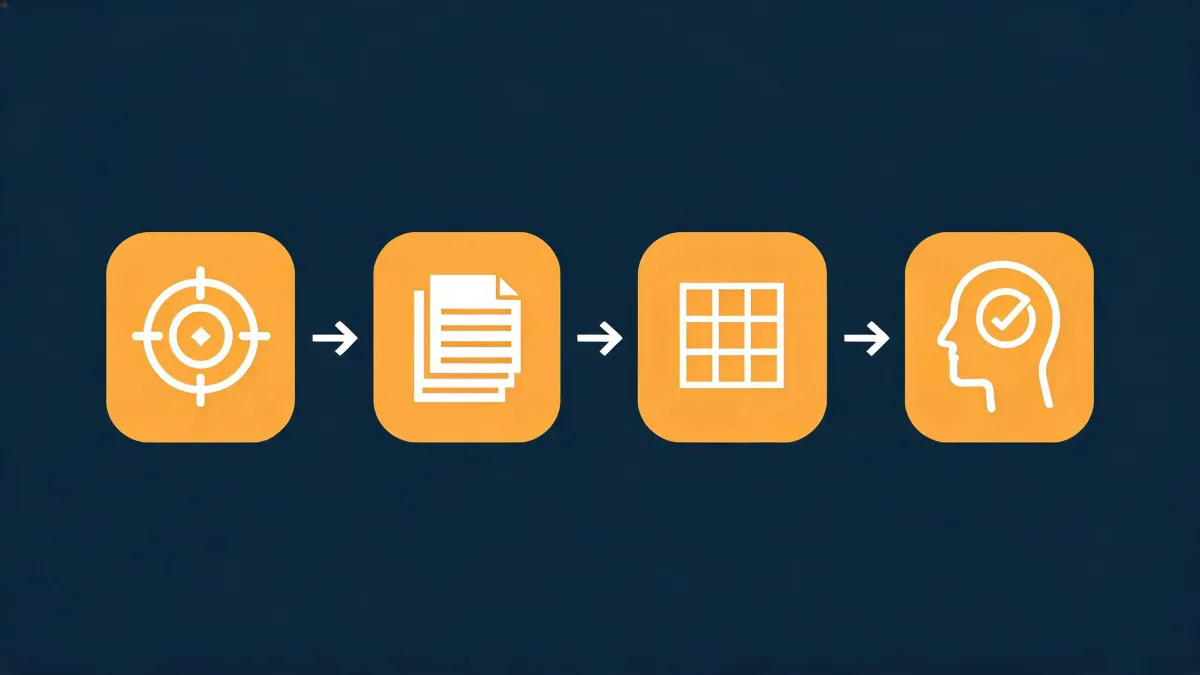
For us, lead generation became a combination of:
- Data enrichment to find the right person at the right company.
- Intent data to prioritize companies showing active demand signals.
- Multi-channel outreach—cold email, LinkedIn, and calls—because no single channel is reliable enough.
- Parallel dialing to apply human effort where it actually changes outcomes.
That's the stack Nooks replaces. Not by magic, but by keeping the whole loop in one system. PhoneBurner could be a piece of that stack, but it wouldn't eliminate the glue work. And glue work is where SDR time dies.
One more thing: if you use LinkedIn automation, read LinkedIn's User Agreement before you risk an SDR's account. The human-in-the-loop review step in Nooks matters for that reason.
(Note to self: get the SDR team to write down what the old spreadsheets cost us before we lose the memory.)
When PhoneBurner is the right choice for SDRs
Honest boundary conditions, because every tool has them.
PhoneBurner makes sense if:
- Your team is small and mostly just calls.
- You have a dedicated RevOps person keeping lists clean.
- You don't need LinkedIn automation or multi-channel sequencing.
- The budget is too tight for a premium platform.
Nooks makes sense if:
- Cold outreach is a core motion, not an experiment.
- Your SDRs spend more time on busywork than conversations.
- You need to show leadership that outreach time leads to pipeline.
- You're tired of patching together a call tool, a data tool, and an email tool.
I'm not going to say PhoneBurner is obsolete. That would be lazy. But I will say this: for our team, the premium bought predictability. Predictability that the number would ring. Predictability that the email wasn't bouncing. Predictability that the follow-up was logged. In a sales quarter, that compounds.
At the end of the day, my job is to make budget decisions that don't get re-litigated at the end of the quarter. The most expensive software we ever bought was the one that “mostly worked” and got replaced halfway through the year.
Nooks wasn't the cheapest option. It also wasn't the riskiest. And for a B2B sales team where every SDR hour has a real price, that tradeoff is the one I'd make again.