
What We're Comparing, and Why It Matters
If you've ever exported a Sales Navigator list and watched half your sequence bounce, you already know the problem. The list looked fine. The titles were right. The companies matched your ICP. Then your open rate told a different story.
I'm a brand compliance manager at a mid-size B2B SaaS company. My job is to review every outbound sequence before it goes live—about 300 unique contact records and 40+ message templates a month. In 2024, I rejected 24% of first-round submissions purely on data hygiene grounds: stale titles, dead domains, emails that verified six months earlier but hadn't been rechecked since.
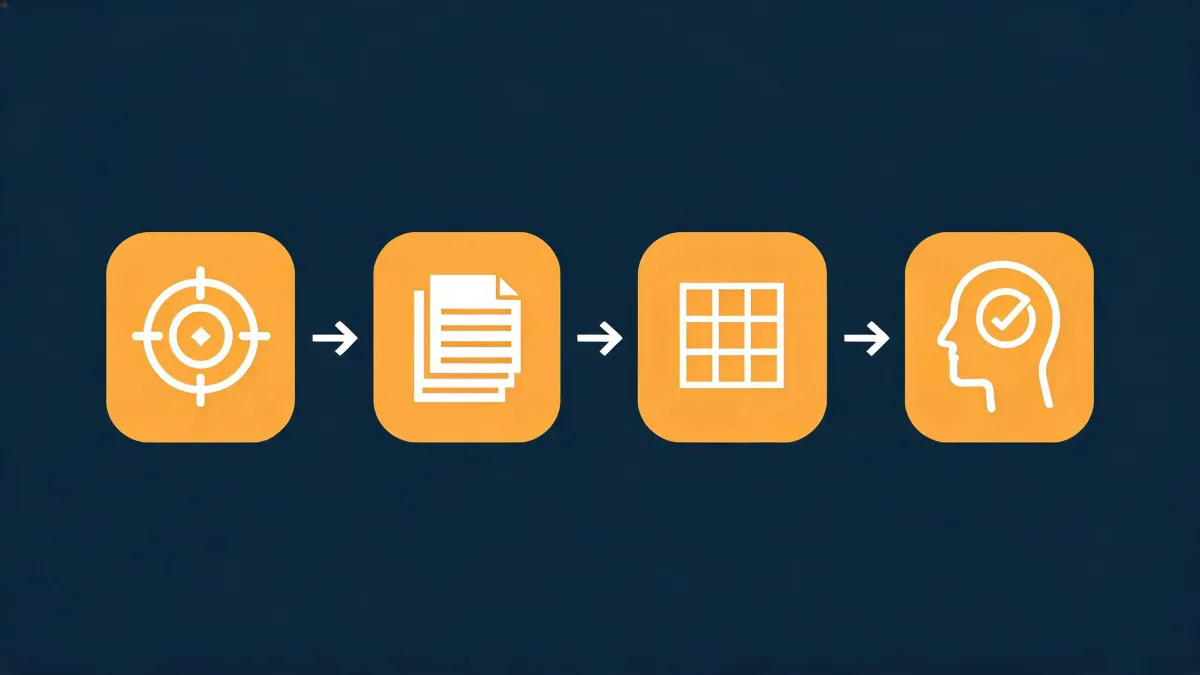
So when people ask me whether LinkedIn Sales Navigator automation is enough for a modern SDR team, I don't give them a yes or no. I give them a framework. Here's what I compare:
- Data collection and enrichment—where the contact data actually comes from
- Workflow automation—what's delegated to machines and what stays with humans
- Intent signals—how timing decisions get made
- Multi-channel orchestration—whether the process extends beyond LinkedIn
This isn't a hit piece on Sales Navigator. It's a working comparison based on what I've seen shipping through our pipeline. Take what's useful.
Dimension 1: Data Collection and Enrichment
Sales Navigator gives you a starting point. It filters well—industry, title, geography, recent job changes. But once you export that list, you're on your own for email discovery, verification, and deciding whether the person still works there.
The native workflow looks like this: filter in Sales Navigator → export CSV → push to Apollo or Hunter → run email verification → manually fill the gaps.
Here's where it gets ugly. The verification step alone becomes a liability once you scale. You start finding records that passed through three tools and still ended up wrong. And the cost adds up—not just in dollars, but in the sheer hours someone has to spend cross-checking.
Okki-go handles this differently. It uses a waterfall enrichment model—querying multiple data sources in sequence rather than pulling from a single provider. If one source doesn't have a verified email, it tries the next one.
The efficiency gain is real. But it's not magic. If you're targeting obscure verticals or heavily non-Western company data, waterfall enrichment still has blind spots. That's the tradeoff no vendor wants to talk about.
My assessment:
- Sales Navigator native: Great filtering, but you're stitching together multiple data vendors downstream. This is a known workflow. It works. You pay for it in manual reconciliation.
- Agent-native (okki-go and similar): Less cross-tool stitching, more verification built into the flow. You pay for it in coverage gaps if your ICP doesn't match their source stack.
Bottom line: if you're selling into mid-market English-speaking companies, agent-native data collection saves measurable hours. If your list skews international or niche, test it before you commit.
Dimension 2: Automation and Human-in-the-Loop Outreach
This is where most teams confuse "automation" with "set it and forget it." That confusion costs them.
I've seen implementations where Sales Navigator feeds directly into an outreach tool and everything runs hands-off. The result: templated sequences hitting spam folders within 72 hours, plus a stack of complaints from prospects who felt like they were talking to a machine. Because they were.
The okki-go approach—agent-native prospecting with human-in-the-loop—draws the line differently. Agents handle data collection, sequencing, and timing. Humans review and approve before messages fire.
Look, I'm not saying manual review doesn't slow things down. It does. But it catches things a machine won't: wrong tone, wrong timing, a prospect who just announced layoffs while your sequence is pushing a demo invite.
From a compliance angle, this isn't about being cautious. It's about protecting brand equity. The cost of one poorly-timed automated sequence reaching a target account is higher than the cost of a human spending ninety seconds reviewing it. That math doesn't change with scale.
This was true five years ago when smart sequences were crude and limited. Today, agent-native platforms handle the mechanical work so humans can focus on the judgment calls. The division of labor has shifted.
Dimension 3: Intent Signals and Timing
Sales Navigator surfaces some intent-adjacent signals—recent activity, job changes, who viewed your profile. Useful, but shallow. It tells you someone moved, not whether they're evaluating your category.
Agent-native stacks layer intent from multiple angles: hiring data, tech stack changes, funding events, content engagement. Agents aggregate these signals and decide who gets prioritized first, and with what message.
The efficiency argument here is straightforward: if an SDR has three hours a week for research, the decision of where those hours go matters more than how fast they work. An agent that surfaces fifty warm signals for a human to review beats a human trying to find five on their own.
But—and this is a big but—intent data is probabilistic, not deterministic. I've watched teams over-index on a funding announcement and burn a sequence on a company that wasn't buying yet. I've also seen signals arrive too late, after a competitor already opened the conversation.
So my honest read: agent-native intent layering works well at scale for teams with broad ICPs. If you're running tight ABM plays on twenty accounts, the automation gives you fewer advantages. Your judgment is the signal.
Dimension 4: Multi-Channel Orchestration
Sales Navigator is fundamentally a LinkedIn ecosystem tool. That's a feature until it isn't. Once you need email, phone, and LinkedIn working together, you're back to stitching tools.
Agent-native workflows—okki-go being the one I've reviewed most closely—tend to start with LinkedIn but extend across email and other channels natively. The agent tracks engagement across each channel and adjusts.
The value of multi-channel coordination is straightforward: multiple touchpoints reinforce each other when they're sequenced correctly, but become noise when they overlap or contradict. An agent that manages cross-channel state avoids the "reached out on LinkedIn and email the same day" problem that makes prospects feel hunted.
The tradeoff: coordinating across channels introduces more surface area for errors. You need the human review layer from Dimension 2 to catch edge cases—like a prospect who unsubscribed from email but is still engaging on LinkedIn.
When to Choose Which
This isn't a "Sales Navigator is dead" piece. It's a "know what you're buying" piece. Here's how I'd break it down:
Sales Navigator native workflow works if:
- Your list is concentrated in English-speaking mid-market companies
- You have a dedicated data ops person handling enrichment and verification
- LinkedIn is genuinely your primary channel (not just the easiest one)
- You value filtering precision over workflow consolidation
Agent-native (okki-go or similar) works if:
- You're running outbound across multiple channels and multiple regions
- Manual enrichment is eating SDR hours that should go to actual selling
- You want intent signals baked into your prioritization, not bolted on
- You want human review as part of the flow, not an afterthought
One caveat, and it's an important one: this analysis is based on my experience at a company with a specific ICP, specific territories, and a specific tolerance for review overhead. If you're an agency juggling forty clients with wildly different profiles, the calculus changes. If you're a founder doing your own SDR work, you might not need either system yet.
Here's what I keep coming back to: tooling should reduce the distance between your team and the buying decision. When it adds friction—whether that's manual verification or poorly-sequenced automation—it's not efficiency. It's just a more expensive way to work.
The real question isn't which tool wins. It's which workflow lets your SDRs spend more time on the judgment calls that actually close deals. Answer that, and the tool choice gets simpler.