
I'm a quality and brand compliance manager at a B2B sales technology company. I review every deliverable before it reaches customers—roughly 200 items a year. Over the past year, I've rejected about 11% of first deliveries. Not because the writing was bad. Because the claims didn't match the product reality.
If you're searching for the best Nooks alternatives, this article won't give you a neat list. I'll give you something more useful: a quality bar. Here's the thing: a lot of teams evaluate sales engagement platforms like they're buying a laptop. They compare feature matrices, count checkboxes, and pick the one with the most boxes ticked. That's not evaluation. That's feature collection. And it's why so many cold outreach platforms end up unused after the first 90 days.
To be clear, I don't hate feature checklists. They have a place. But they should come after you've defined your workflow, not before.
Specs are promises. Outcomes are proof.
A spec is not a product. A demo is not proof. A test is the truth.
Let me rephrase something I see on every vendor website: a spec sheet is not a product. It's a promise. And a demo is not proof. It's a performance. This applies just as much to Nooks as it does to every alternative on the market.
Last year our team tested a cold email platform that claimed 99.9% enterprise-grade deliverability. Under real conditions—mixed sending volumes, standard SPF/DKIM setup, no warm-up miracles—we measured 97.4%. That 2.5% gap matters. On 25,000 sends a month, it means roughly 625 more emails hitting spam folders. The vendor was surprised. We weren't. That's what testing looks like.
Now think about the cold email platform features you're reading about. AI personalization. Smart sequencing. Revenue intent. All of it sounds great. But what happens when the AI writes Dear {{company}} and forgets to fill the field? That's not personalization. That's a defect. And if you're sending a thousand emails a day, that defect multiplies.
I don't have hard data on Nooks AI revenue numbers—I'm not inside their dashboards. But I've seen enough vendor demos to know the difference between a revenue narrative and a revenue proof. Ask every vendor, including Nooks, to show you how their AI output gets reviewed by a human before it touches a prospect. If they can't, that's a quality gap.
That's also why I'm partial to the human-in-the-loop approach. AI can draft. A human should approve.
The best Nooks alternative might not look like Nooks
That sounds strange, but bear with me. If your SDRs spend three hours a day doing manual research, a smarter LinkedIn extension might feel like a breakthrough. But if the real bottleneck is that follow-ups don't happen on time, a LinkedIn extension won't save you. A simpler tool with better triggers might.
People think more features equal more revenue. Actually, the causation usually runs the other way: teams that define their revenue workflow first choose the simplest tool that fits. The tool doesn't create the process. The process selects the tool.
The surprise wasn't that the expensive platform had more features. It was that we had to turn half of them off to keep our reply rates stable. That's the part comparison charts don't show.
Let's talk about LinkedIn extensions specifically. A lot of platforms have one—Nooks included, as far as I can tell. But before you get excited, ask whether the extension is connected to the outreach sequence. Can a rep send connection requests, track replies, and move a prospect into a cadence without copying and pasting? If not, it's a toy, not a workflow tool.
I wish I had tracked how much time we spent configuring the platform versus actually using it. Anecdotally, it was too much. And that time was invisible in every vendor demo.
What should revenue operations teams evaluate in cold outreach?
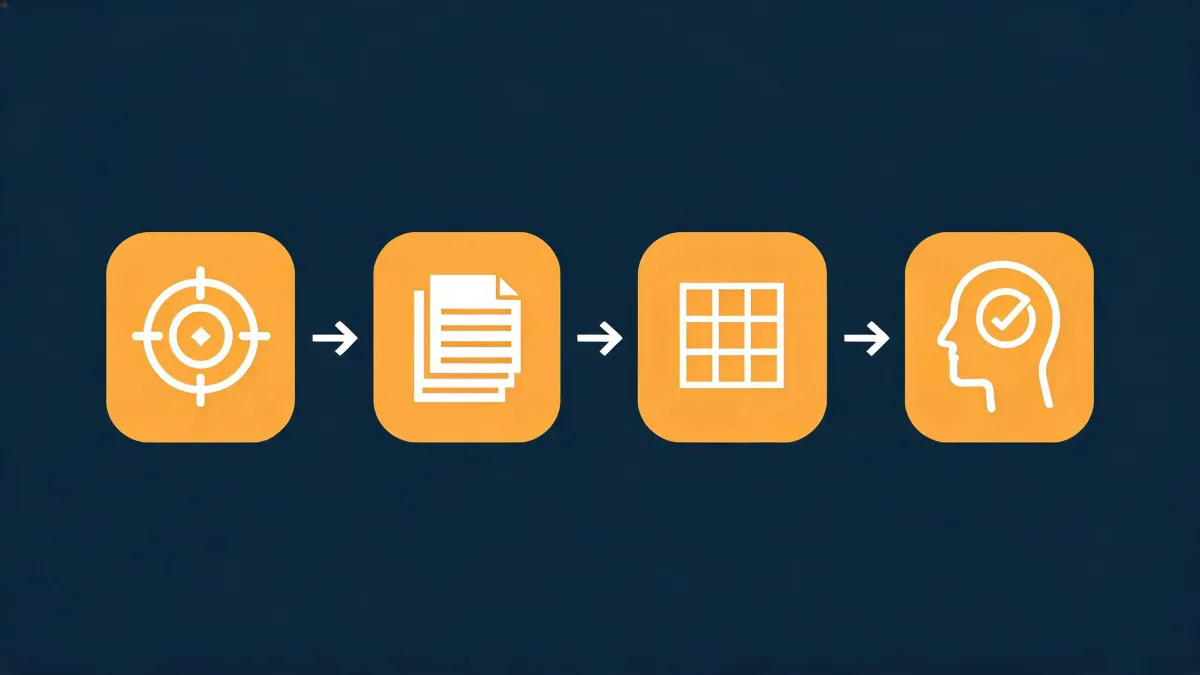
When I do a quality review, I don't ask, 'Does this platform have the most features?' I ask, 'Does this platform produce the outcome we need without creating new risks?' For RevOps leaders, here's what I'd evaluate before talking to any vendor—Nooks or its alternatives:
- Can you test it with a small list first? Not a 30-minute demo. A real test with your own contacts.
- What's the human review step? Can SDRs approve AI-generated emails before they go out?
- How does the tool measure outcomes, not just volume? Look for reply rates, meetings booked, pipeline influenced.
- What's the deliverability foundation? Check SPF, DKIM, DMARC support and what happens to bounces.
- Is the LinkedIn extension part of the workflow, or a standalone dashboard widget?
- What does 'AI revenue' actually mean? If a vendor can't define it clearly, that's a red flag.
These aren't nice-to-haves. They're the minimum viable quality bar.
Small teams deserve more than a pilot program
Here's where I get a little heated. I've seen some vendors treat small teams like test pilots. They offer a discount, hand over a knowledge base, and disappear. That's not support. That's a badge.
When I was starting out, the vendors who treated my small orders seriously are the ones I still use years later. The same philosophy applies to sales tech. A five-person SDR team might not need a 12-module platform. They need a clear path to value. If a vendor won't give you a dedicated setup call because you're not an enterprise account, move on.
The idea that a sales engagement platform must be complex comes from an era when sales tech was built for enterprise admins. That's changed. Modern platforms—Nooks included—are increasingly designed for smaller, more agile teams. But you still have to verify that their version of value matches your version of value.
The best Nooks alternative for a small team might be a tool that's less impressive on a demo and more effective in daily use. Don't confuse simplicity with weakness. Confusing those two is a classic quality error.
The quality bar is the real differentiator
So here's my position, stated plainly: stop evaluating Nooks alternatives like they're all the same product. Start evaluating them like a quality inspector would. Test with real data. Inspect the actual output. Verify the claims. If a vendor can't pass that bar, the number of features won't save them.
This approach worked for us, but our situation is a mid-sized B2B org with a dedicated RevOps function. If you're a founder doing outreach between customer calls, your bar might look different. That's okay. The point is to have a bar at all.
Does that mean Nooks is right for you? I don't know. It might be. But the answer won't come from a comparison chart. It'll come from your workflow, your team, and the outcomes you can repeat. That's the only spec that matters.
Build your quality bar first. The right platform for cold outreach will meet it.