
Stop Treating Email Verification as an Expense—It's a Cost-Control Lever
I'll say it bluntly: if you're evaluating email verification tools by cost per name, you're missing the point. As the person who manages our $480,000 annual sales tech budget and has negotiated with more than 30 vendors, I've learned that the cheapest problem is the one you never have. Email verification is not a data hygiene line item. It's a preventive investment—and in six years of procurement, it's one of the highest-ROI purchases I make.
In my procurement spreadsheets, I track two types of spend: reactive and preventive. Reactive costs are things like rush shipping, emergency consultant calls, and reprints after a file error. Preventive costs are subscriptions that feel annoying until the day they save you. Email verification sits firmly in the second bucket. But too many RevOps teams file it in the first bucket, then drop it during budget reviews.
Everything I'd read about email verification years ago told me it was a one-time cleaning task. Run it once, get to 95% deliverability, done. In practice, that's wrong. B2B databases decay at somewhere around 20-25% per year. People change jobs, companies merge, startups die, and email providers sunset domains. A 100,000-row CRM can easily accumulate 20,000 invalid records in a few quarters. The list you bought from a third-party data provider is out of date before the invoice is processed.
That's not a hypothetical. In Q2 2024, we built a 10,000-segment list for a new account-based campaign. We seriously considered skipping verification to save $450 (the cheap option was, honestly, tempting). I ran a quick test on 5,000 records instead: 17% were undeliverable. We verified the full list for about $1,100. Had we skipped it, our SDRs would have spent hours working dead contacts, our sending domain would have absorbed a reputation hit, and the campaign metrics would have been meaningless.
Don't hold me to the exact math—I'm going from memory—but the order of magnitude is clear. That $1,100 probably saved us $9,000 in burned SDR time and unknown downstream damage. It also gave me a data point I still use when comparing vendors.
Most buyers focus on per-email price and completely miss the accuracy trade-off. The question everyone asks is “what's your per-email rate?” The question they should ask is “what's your false positive rate?” A cheap tool might look great on the invoice while quietly deleting valid leads from your database. I've seen a vendor's “optimization” remove contacts that later became closed-won deals. That's not a data quality issue; it's a revenue leak. Some tools also flag catch-all domains as invalid, which can wipe out entire organizations from your pipeline—another hidden cost that rarely shows up in a vendor's accuracy report.
Integration is the hidden TCO driver. If your verification tool requires manual CSV uploads and constant babysitting, you're paying in engineering hours what you saved in subscription fees. The best setup is one where verification sits inside the workflow—enrichment, verification, and outreach in a single platform. That's why I've become a fan of tools like nooks parallel dialer: it embeds data and intent signals directly into the SDR workflow, which is exactly how clean data should flow. When SDRs use nooks local presence for SDRs to improve pickup rates, they need the underlying company database and sales intelligence to be trustworthy. The tool is only as good as the data feeding it.
The “we'll handle bounces as they come” school of thought comes from an era when email providers were more forgiving and sending volume was lower. That era is over. Today, a single campaign with a high bounce rate can put your domain on a blocklist. Every email you send afterward—from sales, marketing, sales development—gets filtered, regardless of content. I've seen a peer team go through this: one bad list upload, and their primary domain's inbox placement dropped from the low 80s to the 40s for a month. The cost wasn't a few bounces. It was weeks of lost visibility in the exact accounts they were trying to reach.
This is why prevention beats remediation. A small investment in verification protects the deliverability of every future send, not just the current one. It's the difference between fixing a leak and tearing out the whole pipe.
Now, someone will argue: verification tools aren't perfect, so why pay for something that might miss emails anyway? Fair enough. But “not perfect” isn't the same as “useless.” You need to measure precision and recall—the rate of false positives and false negatives—not just trust a marketing page. After one bad experience when a tool passed 8% invalid emails, I built a small QA process: we manually validate a sample of 200 records and compare. That 20-minute test has saved us an estimated $8,000 in potential rework since 2023. Dodged a bullet, honestly. I almost skipped the manual validation to save two hours.
Others say they'll use engagement data from previous campaigns instead. That's part of the answer. If a contact has opened or clicked in the last 90 days, you probably don't need to verify it. But for new accounts, imported lists, or records that have been sitting in the CRM for a year, there's no engagement signal to rely on. Verification is the floor, not the ceiling.
I built a cost calculator after getting burned on hidden fees twice. It sits in our procurement folder, and every vendor quote gets run through it—including verification platforms. The output always surprises people who only look at per-email pricing.
I have mixed feelings about verification spend. Part of me thinks it should be table stakes. Another part knows the decay rate is relentless. I've made peace with it: verification is the cost of a sales motion that doesn't burn out. It's also a lot cheaper than the alternative. A $4,000 annual verification contract is a rounding error compared to a single damaged sending domain or a month of SDRs dialing numbers that no longer pick up.
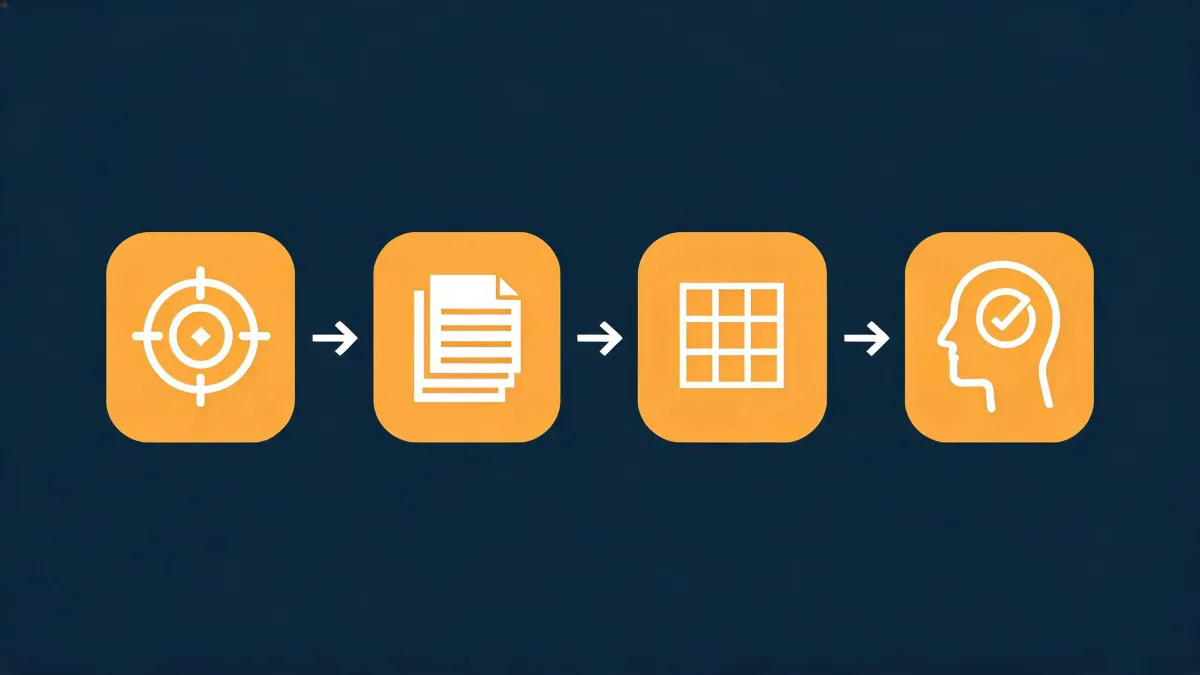
So what should revenue operations teams evaluate in email verification? Not just price. Not just claimed accuracy. I'd suggest four things:
- Total cost per delivered email, not cost per record.
- Precision and recall on a sample you control.
- Integration depth with your CRM and sales engagement platform.
- Impact on sender reputation, not just current bounce rate.
A clean company database is the foundation of sales intelligence. It's also the most underrated lever in the RevOps stack. Five minutes of verification beats five days of recovery—that's not a cliché. In real dollars, it's the difference between a $1,100 preventive expense and a $9,000 rework surprise. Treat email verification as an investment, and your sales team will spend more time talking to actual prospects instead of cleaning up after a dead database.