
-
How I ended up on the wrong side of AI prospecting
-
The demo looked perfect. That should have worried me.
-
What happened when the email sequence went out
-
Why I moved to the okkigo human review workflow
-
How AI sales assistant features fit into an agent-native prospecting workflow
-
How I evaluate okki-go alternatives today
-
Why I now treat checkpoints as the part that saves time
-
The checklist now starts with review
The email was short, polite, and surprisingly specific. It mentioned the founder's recent round, praised a new product update, and asked for fifteen minutes. The only problem? The founder had left the company four months earlier. The person who received it had never heard of us.
That email went out automatically on a Tuesday morning. I approved the automation, not the message. It took a pile of “Who is this?” replies to understand the difference.
How I ended up on the wrong side of AI prospecting
I have spent eight years in RevOps, mostly for B2B software companies. I am not new to lead generation software. I have built enough email sequences to know that a good sequence is a mix of research, timing, and a little bit of judgment. I have also made enough mistakes to maintain a team checklist that has kept me humble.
Earlier this year, the pressure was familiar. The sales team wanted more opportunities before an industry event. Our contact list was stale, our SDR team was already at capacity, and the lead generation software we used kept returning the same outdated names. The deadline had already slipped twice.
I did what many RevOps people do in that moment: I started comparing AI SDR tools and okki-go alternatives. I had a spreadsheet, several demos, and a strong bias toward automation. Okkigo was in that mix. I remember thinking the okkigo human review workflow sounded responsible but slow. Why would I want a workflow that stops an agent from sending when I needed speed? That question became expensive.
The demo looked perfect. That should have worried me.
The tool I chose had impressive AI sales assistant features. It researched target accounts, enriched contact data, and generated a four-email sequence. The sample emails sounded human. They used real signals, not generic filler. It felt like the future of prospecting, and I wanted to test it without adding friction.
The setup screen included a recommendation: review the generated contacts before sending. There was also an option to let the agent send automatically. The launch had already slipped twice, and I wanted to show progress before the Monday pipeline meeting. I convinced myself that I would watch the campaign closely and that manual review was unnecessary for a well-built model. I enabled automatic sends. I closed my laptop.
What happened when the email sequence went out
The first replies came within an hour. “Who is this?” was the polite version. Then our customer success team started forwarding messages from existing customers. The sequence had sent an email meant for someone else to customers who had been active for years.
The worst reply came from a VP of Sales at a company we had pursued for a year. She said it felt like we had not done any research on her company. I did not have a good answer, because the AI had not researched her company. It had matched her name to an old row in a third-party dataset and then wrote about a recent event that belonged to a different company. The AI had not made up the event. It had pulled it from a source that still listed her at her previous employer. That is the danger of automation without review.
No, the campaign did not produce a meaningful reply from a real prospect. It did produce a postmortem and a new rule: no campaign gets sent before a human sees the contact list. I wish I could say I added that rule after careful thought. The truth is I added it after one of our sales reps forwarded the email to the entire team with the subject line: “Please tell me this was not intentional.”
Why I moved to the okkigo human review workflow
I did not want another AI demo. But I did ask okkigo to show me one thing: how the workflow behaves when the agent is ready to send. The answer became my standard.
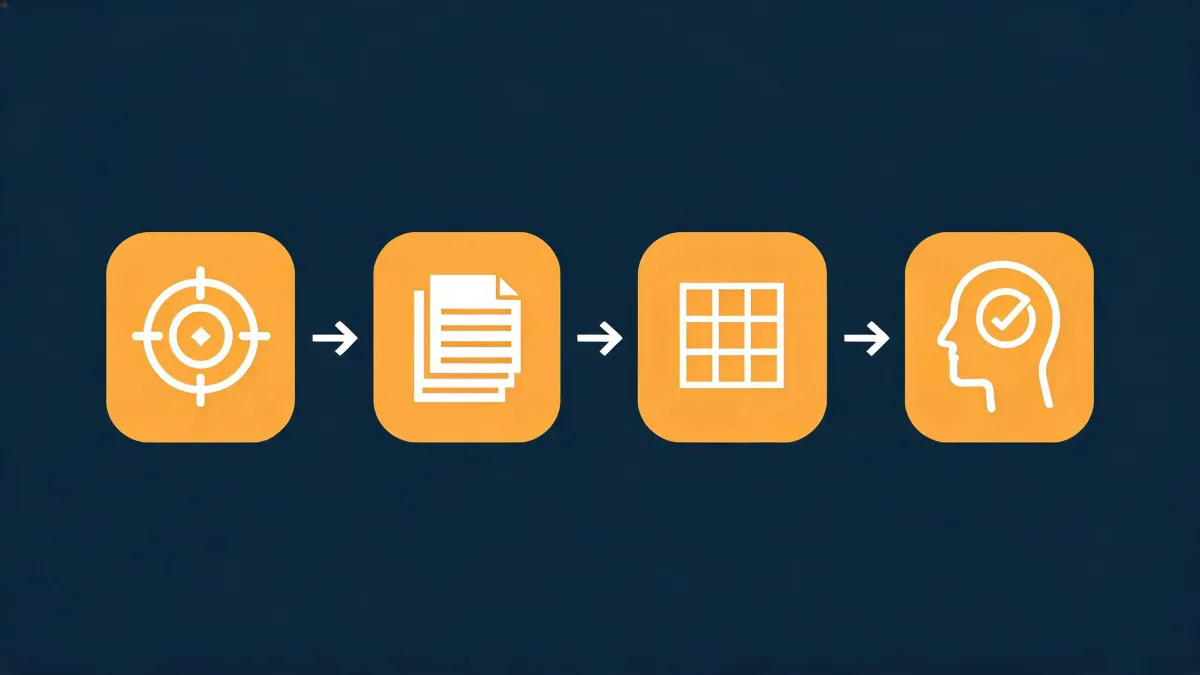
The okkigo human review workflow stops the agent before the first message. The AI has already found the accounts, enriched the contacts, verified addresses when possible, and written the first draft. Then it waits. A human reviews the batch. If a contact is wrong, the human removes it. If the messaging misses the mark, the human edits it. Only then does the sequence go out.
It sounded too simple. Actually, that is what I did not trust at first. But simple is exactly what an urgent outbound process needs. The more complex the campaign, the more likely a machine will make a confident mistake at scale.
How AI sales assistant features fit into an agent-native prospecting workflow
People ask me whether AI sales assistant features are worth the hype. The question is slightly wrong. The better question is how those features fit into an agent-native prospecting workflow.
An agent-native workflow treats AI as an agent that does real work: research, enrichment, verification, and first-draft copy. That agent produces a queue of opportunities and messages for a human to review. The human part is not a concession. It is a feature of the workflow. Without it, small input errors scale into large reputation problems.
Let me use the failure as an example. The AI draft was fine. The problem was upstream. A human reviewer would have caught the mismatched contacts in a few minutes. The human is not there because the AI is dumb. The human is there because context lives outside a database.
How I evaluate okki-go alternatives today
People still ask for recommendations, and I still compare okki-go alternatives when a new project needs a different approach. But I no longer ask which tool has the largest database. I ask three things:
- Can the agent run discovery and enrichment, then stop before sending?
- Where does human review fit into the workflow, not into the settings?
- Does the system give the human enough context to reject a wrong contact or rewrite a bad sequence message easily?
If the answer to the first question is no, I walk away. It does not matter how good the AI sales assistant features are if the only way to prevent a mistake is to disable the assistant.
Why I now treat checkpoints as the part that saves time
I used to think a human review workflow was for teams that did not trust automation. I was wrong. It is for teams that understand urgency correctly.
My instinct before the failed campaign was to skip a review to save time. The campaign was fast, but it was fast in the wrong direction. It hit people who did not know us, people who already knew us, and people who now think we do not pay attention. That kind of mistake gets more expensive the faster you make it.
Under a deadline, certainty is worth more than speed. A ten-minute human review before a send might feel like a delay. It is actually an investment in the only thing that matters in outbound: knowing the message is going to someone who could reasonably hear it.
The checklist now starts with review
I have not given up on lead generation software. I have given up on generating without reviewing. The email sequence I run today follows the same structure as the one that failed, but it does not leave the queue until a human has looked at it.
The AI still drafts. The agent still works its way through a target list. But the okkigo human review workflow sits between intelligence and action. That is where I made my mistake. It is also where I fixed it.
If you are evaluating okki-go alternatives or any lead generation software, do not ask which one makes the best demo. Ask what happens when the AI is wrong. The best answer is not “it won't be wrong.” The best answer is “a human will see the risk before a prospect does.”