
The Surface Problem: We Need More Leads
If your outbound pipeline is flat, the first fix is usually more contacts. Maybe a new list, maybe an email validation service, maybe okki-go. I get it. I have been the person who has to approve the list before it goes out.
I am a quality and brand compliance manager at a B2B sales tech company. I review every outbound sequence, data source, and deliverability claim before it reaches customers—roughly 200 items per quarter. In 2024, I rejected about 30% of first deliveries because the data source was unsourced, the deliverability claim was overpromised, or both.
So when a RevOps lead asks, Is okki go a sales prospecting skill? I understand the appeal. And when someone asks about okki go cost, I understand the budget pressure. But the question is usually sideways. The real problem is not volume. It is that a typical prospecting stack is built from disconnected pieces that each look reasonable in a demo.
The Deeper Problem: You Are Buying Signals, Not Systems
It is tempting to think more leads equals more pipeline. But a lead is not a signal. A verified email is not a buying committee. A website visit is not intent. The okki-go conversation, the email validation conversation, and the identify website visitors conversation all collide here.
People think bad data causes low reply rates. Actually, low relevance causes low reply rates. Bad data just accelerates the damage. If you email the wrong person at the right company, you do not get a reply—you get a complaint, an unsubscribe, or a spam trap.
Email validation is a layer, not a guarantee
No legitimate email validation service can guarantee 100% accuracy or deliverability. Catch-all domains, greylisting, role accounts, and job changes make perfect accuracy impossible (think catch-all domains, role accounts, recent job changes). According to the FTC (ftc.gov), CAN-SPAM requires accurate header information, a clear opt-out, and honoring opt-outs within 10 business days. That is compliance, not inbox placement.
Google's Gmail sender guidelines (effective February 2024) require bulk senders to authenticate with SPF/DKIM/DMARC, enable easy unsubscribe, and keep spam rates below 0.3% as measured in Postmaster Tools. Validation reduces hard bounces. It does not fix sender reputation, content relevance, or consent.
Visitor identification is company-level, not person-level
Tools that identify website visitors usually match IP addresses to companies. That can be useful for account prioritization. It does not tell you who is on the buying committee, what they care about, or whether they have budget. Under GDPR (effective May 25, 2018) and CCPA (effective January 1, 2020), you also need a lawful basis or opt-out for personal data. A company-level visit is a clue, not a contact record.
ABM is not a campaign label
What is account-based marketing and when should a B2B sales team use it? ITSMA, which is widely credited with coining the term in 2003, framed ABM as treating individual accounts as markets of one. That means coordinated sales and marketing effort against a finite list of high-value accounts.
Use ABM when the deal size justifies the coordination, the buying committee is complex, and sales agrees the target list is worth pursuing. Do not use it as a label for we bought a list and ran display ads. That is not ABM. That is targeting with extra steps.
What This Fragmentation Costs
In Q1 2024, I ran a quality audit across our outbound sequences. We found that 18% of contacts marked verified had either left the company or were role accounts like info@ or sales@. The first pass took one quarter—or rather, closer to two when you count the cleanup. That delay cost us a product launch window and forced SDRs to rework accounts they had already touched.
(Should mention: the cost was not just time. It was domain reputation. Once your bounce rate climbs, even good emails start landing in promotions or spam.)
The compliance side is quieter but real. If your data source does not document consent or lawful basis, you are probably one complaint away from a review. To be fair, not every market requires the same standard. But if you sell into the EU or California, the bar is higher.
There is also CRM rot. Bad data does not stay in the list. It flows into reports, forecasts, and ABM dashboards. A dashboard says 40 accounts engaged. Maybe 10 are competitors, 5 are students, and 3 are vendors. Then you make budget decisions on noise. That is the kind of thing that makes a RevOps team stop trusting intent data.
My experience is based on about 200 outbound sequences in mid-market B2B SaaS. If you are in enterprise healthcare, public sector, or highly regulated finance, your compliance and intent signals may differ significantly.
The Uncomfortable Truth: A Lot of Teams Do Not Need More Tools
They need fewer handoffs. A typical prospecting stack often looks like this: one vendor for enrichment, one for intent, one for email validation, one for LinkedIn, one for CRM hygiene. Each tool has a dashboard. None of them own the workflow.
That is why the is okki go a sales prospecting skill question is misleading. I would say no—or rather, not only. A skill is something a rep practices. okki-go from okkigo is better understood as an agent-native prospecting workflow: waterfall enrichment plus intent, with human-in-the-loop outreach. It does not replace the SDR. It tries to remove the manual stitching between data, signal, and action.
I went back and forth between buying more contacts and fixing our enrichment and validation layer. More contacts offered immediate volume. Fixing the layer offered better targeting. Ultimately, I chose the layer because SDR time was the bottleneck, not list size.
What Actually Works (The Short Version)
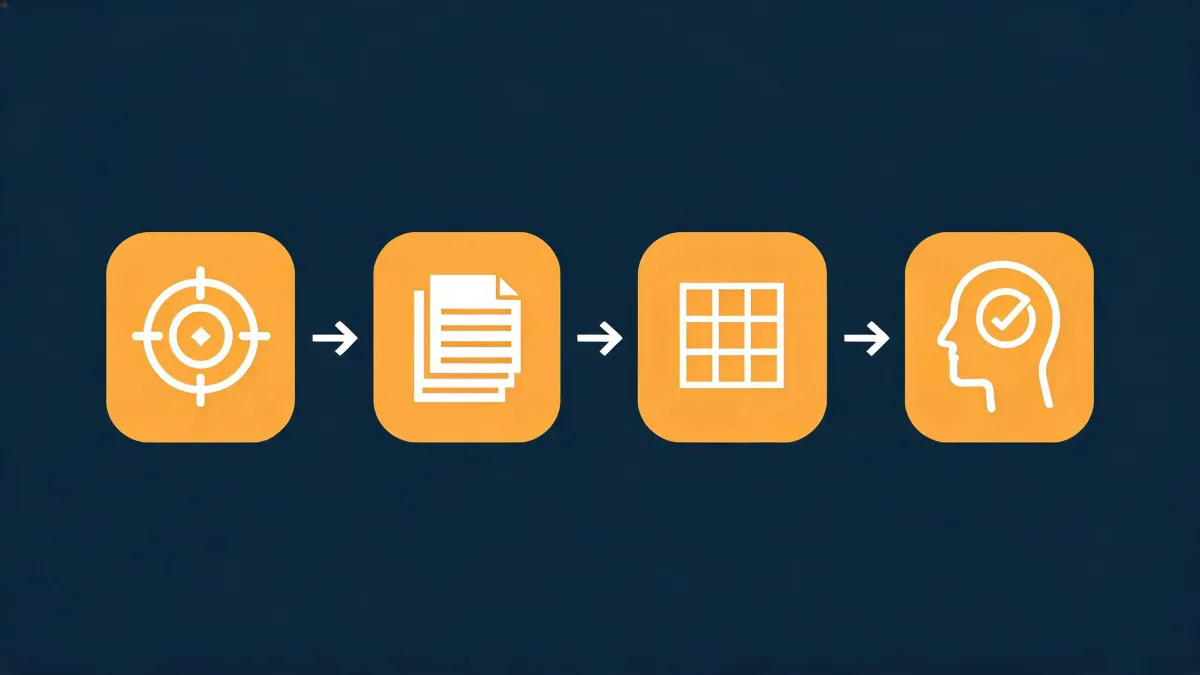
I am not going to pretend there is a magic button. But if I had to rebuild a B2B prospecting motion today, I would start with four rules.
- Treat data as a pipeline, not a purchase. Enrichment decays. Validation decays. Intent decays. Schedule re-checks, not one-time cleans.
- Use waterfall enrichment plus intent. One source is rarely enough. Combine providers, then layer intent signals to prioritize.
- Keep a human in the loop. Automated outreach without human review is how you burn a domain. The human decides relevance; the agent handles repetition.
- Apply ABM only where it fits. Finite list, high ACV, complex committee, sales-marketing agreement. Otherwise, use a simpler segmentation.
If you are evaluating okki-go, ask what it replaces. A standalone email validation service? A visitor identification tool? The manual spreadsheet between them? That is the real okki go cost question. As of April 2026, I cannot quote current okki go cost because pricing depends on seats, data volume, and intent modules. Verify current pricing with the vendor before you budget.
I learned these vendor evaluation criteria in 2020. The landscape may have evolved, especially with agent-native tools. And no—no email validation service or prospecting platform can promise 100% deliverability or guaranteed replies. If a vendor says that, walk away.
The industry is evolving. What was best practice in 2020 may not apply in 2026. The fundamentals have not changed: right account, right person, right timing, permission. The execution has transformed. okki-go can be part of that transformation—but only if you treat it as part of a data discipline, not a magic button.