
-
My unpopular take: stop buying intent data until your list isn't dirty
-
Argument 1: The npm update that cost us a week
-
Argument 2: We paid $14,400 for a 0.4 percentage point lift
-
Argument 3: The Sales Navigator export problem nobody warns you about
-
"But intent signal is where the real edge is at scale"
-
Where I'll admit uncertainty
-
What I actually think RevOps teams should evaluate first
My unpopular take: stop buying intent data until your list isn't dirty
If you're evaluating a cold outreach stack in 2026, there's a decent chance buying intent signal data is somewhere near the top of your checklist. It was on mine. And I honestly think that's the biggest mistake most B2B teams are making right now.
My position: buying intent signal is a multiplier, not a foundation. If the thing underneath it is garbage, you're just paying more to scale garbage.
That opinion didn't come from a whitepaper. It came from six years of running outbound infrastructure at a B2B SaaS company, and roughly $18,000 in wasted tool spend I personally approved. I've got a checklist now. I built it the hard way.
Argument 1: The npm update that cost us a week
Everyone told me to stage dependency updates before pushing to production. I only believed it after skipping that step once and watching our outbound sequences quietly fall apart for four days.
It was March 2024. One of our sequencing integrations had a minor version bump on its npm package — patch notes literally said "minor fixes." I merged it at 5 PM on a Friday because, honestly, what's the worst that could happen? Nobody was watching send metrics over the weekend. That part was on me.
Monday morning, our outbound volume was down about 60%. A field rename in the update had silently broken our pre-send validation. Some emails went out to addresses they should never have touched. Some got skipped entirely. Root cause took us about two hours to find because nobody thought to look at the dependency tree. If you've ever spent a Monday morning chasing phantom deliverability issues, you know that specific sinking feeling.
Total damage: about $3,200 in wasted engineering hours, four lost sending days, and a slightly bruised ego. And here's the thing — how to update the okki go npm package is a search I now run before I touch a version number. Not because the package is fragile. Because my process was.
Approving a Friday-afternoon merge without staging is basically the same instinct that makes RevOps teams sign a $14K intent data contract before they've cleaned their bounce list. Chasing the shiny update, skipping the boring step.
Argument 2: We paid $14,400 for a 0.4 percentage point lift
In 2023 we signed up for a buying intent signal subscription with one of the well-known vendors. Twelve months, billed upfront — about $14,400.
The result? Reply rate moved from 3.2% to 3.6%. That's it. A 0.4 point bump that wouldn't clear a basic significance test on our volume.
To be fair — intent data isn't the problem. Our usage was. We layered intent scoring on top of a list where roughly 14% of contacts had a stale title or a dead domain. We were trying to get smarter about who to email while ignoring that 14% of the "who" was already wrong.
I'm not an ML engineer, so I can't speak to how the scoring models actually weight signals internally. What I can tell you from a RevOps perspective is: if your enrichment waterfall still has obvious gaps, intent data compounds those gaps instead of fixing them.
If a okki go lead generation example ever looks too good to be true, it's usually because the underlying data was already clean. That's the boring part nobody wants to sell you.
Argument 3: The Sales Navigator export problem nobody warns you about
This one is quiet and expensive. Sales Navigator is genuinely great. Sales Navigator export — the CSV that comes out — is not.
We audited 2,000 exported records across four campaigns last year. About 312 of them (roughly 15.6%) had at least one field-quality issue: titles with stray commas that shifted columns, `linkedin.com/in/` URLs carrying tracking junk, inconsistent capitalization on company names that broke our deduplication logic.
Every dirty record burns a verification credit. Most email verification tools bill per record. So a bad export isn't just an annoyance — it's a recurring tax on every downstream step of your pipeline.
Multiply that across a prospecting flow that touches enrichment, verification, and sequencing, and a 15% dirt rate can easily swallow 20-30% of your tooling budget in wasted calls.
"But intent signal is where the real edge is at scale"
I hear you. And yes — when you're already clean, buying intent signal absolutely generates edge. Our best-performing quarter last year ran on top of a scored, filtered, intent-weighted list. The data worked. The foundation underneath it was just doing its job quietly.
The other pushback I get: "Small RevOps teams can't afford to build foundations."
That's backwards. A four-person team is hurt more by waste, not less. A $1,500 wasted subscription for a startup stings worse than a $15,000 line item for a 50-person sales org. Small doesn't mean careless — it means every dollar has to do something. And that's actually the point: small teams deserve tooling and workflows built for their reality, not enterprise hand-me-downs spit out of a demo they can't afford.
Where I'll admit uncertainty
Honestly, I'm not 100% sure why intent vendors keep bundling list-cleaning features into premium tiers. My best guess is that they know the sequencing is backwards too — that clean lists matter more than a fancy score — but "we can clean your CSV" doesn't sell as well as "AI-powered buyer signals."
Take that with a grain of salt. I've never worked at an intent vendor.
What I actually think RevOps teams should evaluate first
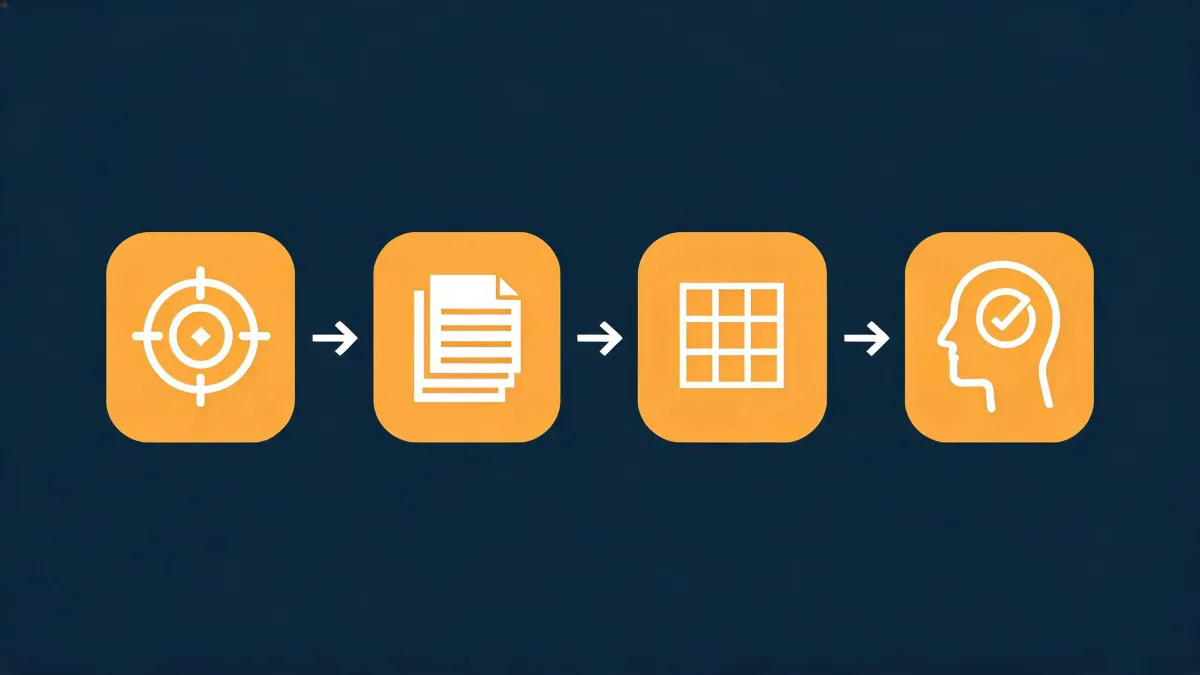
Before you add another data layer to the stack, here's the order I'd run it in:
- List hygiene audit. Sample 500 contacts from your last 90 days of outbound. Count how many have a broken title, a dead domain, or a malformed name. If it's over 5%, that's your next project.
- Dependency + integration checks. Every external service your sequences depend on — including that npm package you update quarterly — should be staged and tested, not merged on a Friday.
- Verification waterfall. Enrichment and verification should run before scoring, not after. Otherwise you're scoring ghosts.
- Intent layer. Buy this last. Route it against a clean list. Measure lift against a controlled cohort, not against a different send entirely.
Then, and only then, does paying for buying intent signal make sense. And if you're a two-person RevOps team being quoted enterprise pricing for the whole kit — trust me on this one — you don't need all of it. You need the boring 60% to be correct.
The full okki go lead generation example set we run on top of this stack is public. But the stack isn't what makes it work. The hygiene is.
Bottom line: intent is a multiplier. Multipliers multiply whatever's underneath. Fix the underneath first.