
-
The surface problem: You think you need more calls, more hours, more everything
-
What I've learned from 280 rush orders: the bottleneck is almost never raw speed
-
The hidden cost: ignoring verification isn't cheaper, it's just delayed
- The fix: an agent-native prospecting workflow, built for humans
-
What I'd do tomorrow if my pipeline was on fire
I've spent 12 years running emergency production for printing and fulfillment—the calls that start with "we need it yesterday." Maybe 280 rush orders, give or take. I've made the mistake of skipping verification to save time, and I've paid for it. So when I look at sales teams panicking over pipeline coverage, I see the same pattern: they're reaching for speed when they should be reaching for data.
This post is for SDRs, revenue ops folks, and small team leaders who are googling answers like "nooks parallel dialer connect rates" or "how to fix cold email" at 9pm on a Tuesday. I'm going to explain the real problem—and a workflow that actually works. I'll keep it practical and honest, because you don't need another fluffy sales blog.
The surface problem: You think you need more calls, more hours, more everything
When outreach is underperforming, the usual diagnosis sounds like this: "We don't have enough time to call everyone." "Our reply rates are junk." "The list is too small." The natural fix, for most teams, is to buy a faster dialer, buy a bigger list, and tell reps to work longer. That's the equivalent of putting a bigger engine in a car with flat tires.
From the outside, it looks like a velocity problem. The reality is a workflow and data quality problem. I see the same thing with rush orders. Clients think we're slow, but when we look at the files, the specs are wrong or the address on the proof has an error. Fast production with bad specifications only gets you to the wrong place faster. (Which, honestly, is why we have a strict pre-flight process now.)
Let's talk about what that means for sales. If your phone numbers are disconnected and your emails bounce, no dialer in the world is going to fix your connect rate. Speed matters, but it's a multiplier—if the base is broken, multiplication makes it more broken.
What I've learned from 280 rush orders: the bottleneck is almost never raw speed
Here's what an emergency specialist actually does when the deadline is tight: triage. Before we touch anything, we ask three questions:
- What is the time window exactly? (Not "soon"—hours.)
- Is the deliverable feasible in that window, given the specs and the data we have?
- What's the worst-case risk if we go with the cheapest, fastest route?
Those three questions apply perfectly to prospecting. The time window is your campaign deadline. The deliverable is the list and the sequence. The risk is sending to an unverified list and wrecking your sender reputation.
And the biggest misconception I see is that "rush" means "skip the checks." It's actually the opposite. During a rush order, checks are even more important because there's no time to absorb mistakes. I remember a $15,000 print order that came in 36 hours before a client's event. The team wanted to rush the file straight to press. My gut said we had to run one more verification pass. The account manager pushed back—said the client had already approved everything. We compromised: ran the pass while the press set up. It caught a CMYK conversion error that would have looked awful on paper. The client never knew. That's when I formalized our pre-flight policy.
"If the shipping address is wrong, overnight delivery doesn't help anyone."
In sales, the same rule applies: if the contact data is wrong, a parallel dialer doesn't connect you—it just fails faster. If the email address is dead, a multichannel outreach sequence doesn't send a great first impression—it sends a bounce signal. Just as USPS defines envelope standards to keep mail sorting efficient (usps.com) and FTC rules require advertising claims to be truthful and substantiated (ftc.gov), your outreach needs its own deliverability checks. That's why an email validation service is a foundational layer, not an optional extra.
The hidden cost: ignoring verification isn't cheaper, it's just delayed
I can't tell you how many clients have come to me after a catastrophic rush-job failure at another vendor. They went with the faster, cheaper option, and the cost of fixing it was higher than doing it right the first time. One memorable case: a client lost a $12,000 contract because their previous vendor skipped proofing and the final job was unusable. We saved them at the last minute and billed a $1,400 rush fee on top. The "cheap" vendor wasn't cheap—they just hadn't sent the bill for the risk yet.
Sales teams do the exact same thing when they skip data cleaning. I've seen a 5-person startup spend $2,000 on a "high-quality" lead list, then blast a campaign without verifying the emails. Their bounce rate spiked so high that their email provider flagged their domain. Suddenly, even their carefully crafted follow-ups to actual inbound leads were going to spam. They couldn't claw back the domain's reputation for weeks. The cost wasn't just the money—it was every conversation that never happened.
That's the price of skipping the deep work. You might hit your connect rate target if you dial fast enough, but you'll also burn your domain, waste your reps' energy, and possibly harm your brand. Most of the time, the ROI of a few hours of email verification is far higher than an extra hundred dials. Maybe I'm biased from the print world, but I'd rather measure twice and cut once.
The fix: an agent-native prospecting workflow, built for humans
Now let's get to the part you're actually searching for: how does a parallel dialer fit into an agent-native prospecting workflow? It doesn't sit in a vacuum. The phrase "agent-native" is key—it means the AI tools are designed to work beside your reps, not replace them. Nooks (the nooks official website) is built around that idea.
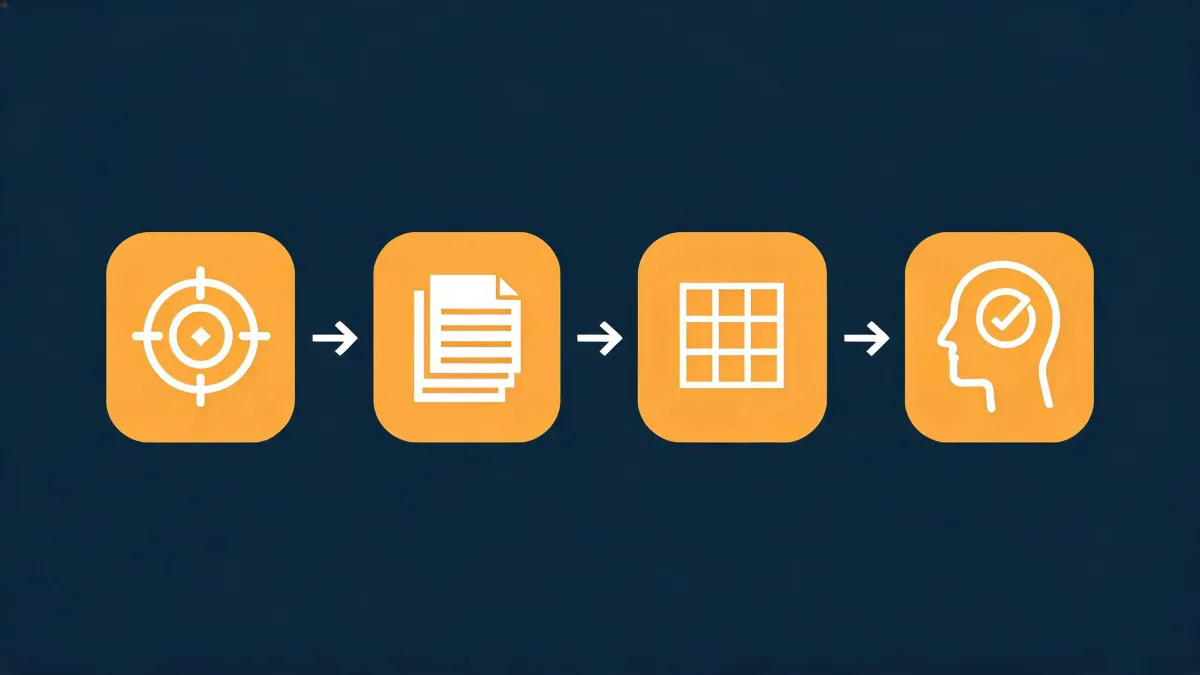
In practice, the workflow looks like this:
- Enrich and verify your list. Start with data enrichment (add missing roles and company context) and email validation (strip out risky address types and null mobile numbers). If you're using nooks, this integrates with your data stack before a single activity is sent.
- Build a multichannel cadence. Connect calls, cold email, and LinkedIn social actions into one sequence. The parallel dialer handles simultaneous outbound call attempts, so your reps aren't stuck in manual dial-to-dial loop.
- Let intent data set the priority. Use buying signals to rank accounts, not just the size of the list. nooks' intent layer helps you focus the parallel dialer on the likeliest buyers.
- Keep a human in the loop. The system can pre-draft emails and suggest next steps. A rep reviews one click before sending. That's the agent-native part: the parallel dialer books the conversation, a human closes it.
What does this mean for connect rates? I can't give you a blanket "nooks parallel dialer connect rates" number, and neither can anyone else—the market is too varied. What a well-designed parallel dialer does is remove the mechanical barriers. Your rep is talking to a live prospect instead of staring at an idle phone. The list has been validated, so your email doesn't bounce into the void. Intent data means you're not blindly calling accounts that haven't shown interest. Do all that, and your connect rate will often go up as a natural consequence—no guarantee needed. If someone tells you they can guarantee a specific rate, run away. That's not how buying behavior works.
Small teams deserve the same firepower
Most vendors ignore small teams because the deal size is small. That's a mistake. I remember starting out with $200 print orders, and the vendors who treated them seriously became the ones I trusted with $20,000 orders later. Small customers aren't less valuable—they're just at an earlier stage. The same logic applies to sales tools. Nooks doesn't require an enterprise implementation team. A lean SDR squad can get going with a parallel dialer and email validation quickly, without huge onboarding costs. You don't need a rev ops department to benefit from a solid agent-native workflow. That matters for small but ambitious teams.
Of course, starting small means starting with data. If you're a founder doing your own outreach, the best investment you can make is email validation service and a clean list. Then, as volume grows, add the parallel dialer and multi-channel orchestration. It's a scalable path, not a rip-and-replace ERP project.
What I'd do tomorrow if my pipeline was on fire
You might be in "right now" mode, not "strategy" mode. Fine. Here's the sequence I'd use to calm the fire:
- Pause all outreach. Yes, all of it.
- Run a quick list audit: how many emails bounce, how many numbers are disconnected? Take a sample of 100 records and test them. You'll quickly see if the base is healthy.
- If the sample is dirty, use an email validation service to clean it. Most tools also flag mobile and landline status. That alone can remove a huge portion of wasted dialing effort.
- Set up a single multichannel cadence: calls + email + LinkedIn. Keep it simple. The parallel dialer will increase your live-call connections.
- As you rebuild, add intent data to focus on the accounts that are already in-market. Let the AI help you sequence the follow-ups, but always keep a human review step.
This isn't complex, but it's rigorous. It's the same discipline I use in my rush business: check the spec, verify the address, confirm the deadline, then go.
One caveat: I'm describing nooks based on what I know as of Q1 2025. The platform changes quickly, so take this as a starting point and check the nooks official website for current features and pricing. But the core principle won't change: your outreach pipeline only runs as smoothly as your data. Fix the data, then turn up the speed. That's how the emergency stops being an emergency.
If you're tired of the panic-cycle and want a system that scales, start with clean data and a human-in-the-loop parallel dialer. That's the real agent-native workflow. It's not about going faster; it's about going faster toward the right people, with the right message, and the right records underneath.