
-
There's no single answer to "do we need data enrichment?"
-
Scenario A: 1–4 reps, founder still heavily in the pipeline
-
Scenario B: 5–15 reps, manual research is the bottleneck
-
Scenario C: 15+ reps, multichannel sequences, real pipeline targets
-
Scenario D: Outbound agency or fractional SDR shop
-
How to figure out which scenario you're in
There's no single answer to "do we need data enrichment?"
Ask five B2B sales leaders whether they need data enrichment capabilities, and you'll get five confident answers — all different. One swears by it, one just cancelled their subscription, two are "evaluating," and one is still doing everything in a spreadsheet.
They're not disagreeing about whether enrichment works. They're describing different situations with the same word.
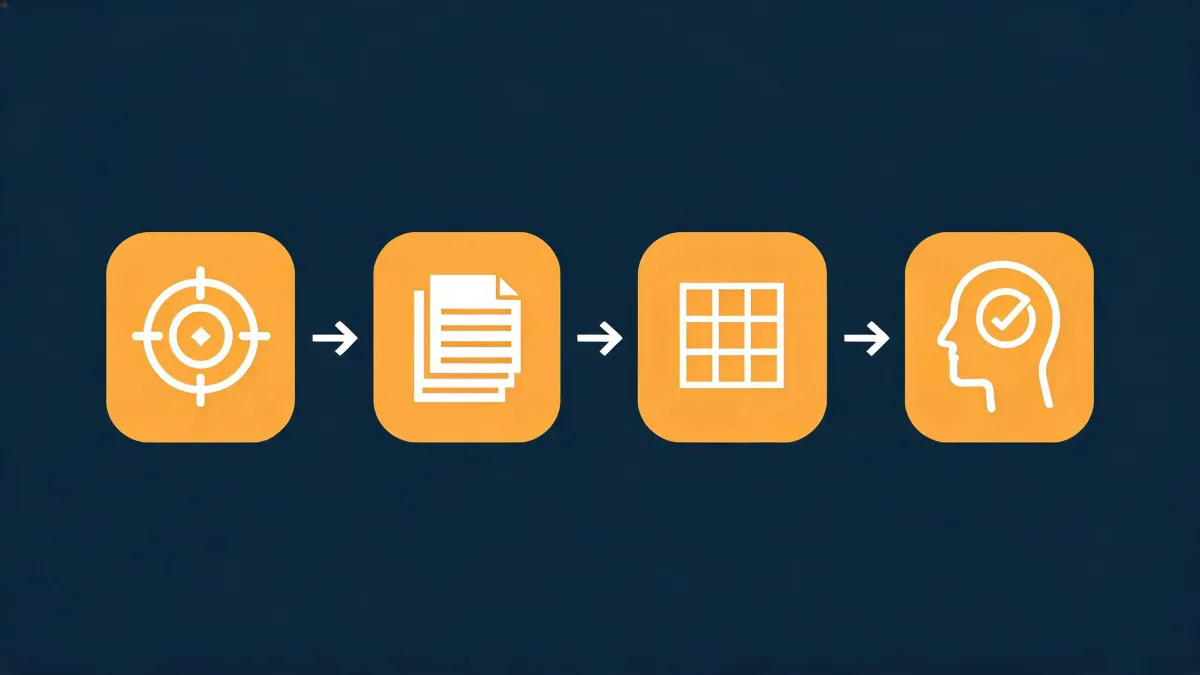
The question isn't should a B2B sales team use data enrichment? It's at what point does it stop being overhead and start paying for itself? Based on what I've seen running outbound for teams ranging from 2 reps to 40+, there are four distinct scenarios. Your answer depends entirely on which one you're in.
Quick definition, since "enrichment" gets thrown around loosely: data enrichment is the process of appending missing fields (verified emails, direct dials, job titles, tech stack, intent signals) to a record you already have. It's not lead sourcing. It's making existing records actually usable.
Scenario A: 1–4 reps, founder still heavily in the pipeline
Here's the unpopular take: you probably don't need enrichment yet.
I know that's not what a sales intelligence vendor will tell you. But I've watched this mistake play out repeatedly. In my first year running outbound for a seed-stage startup, I signed up for a $3,900/year enrichment platform because a competitor's blog said we "needed it to scale." Six months later, I'd used it eleven times. Eleven. The data was fine. The problem was we didn't have a defined ICP yet — so enriching bad-fit accounts just helped us send polished emails to the wrong people faster.
At this stage, the bottleneck isn't data volume. It's clarity. You don't know which five attributes actually predict a deal yet. You can't automate a hypothesis you haven't formed.
What works instead: manually research 40–60 accounts. Track every field you wish you had. When you notice you're copying the same three data points into a spreadsheet every week, that's your signal.
Saved $3,900 on tooling that year. Spent it on two months of a part-time researcher instead. Better ROI, honestly.
Scenario B: 5–15 reps, manual research is the bottleneck
This is where enrichment starts paying for itself — not by saving money, but by saving hours.
Do the math on your current process. If a rep spends 6–8 minutes per prospect finding a verified email, confirming the title, and checking for a direct dial, that's roughly 5–7 hours per week per rep on pure data gathering. At a $70K OTE, you're burning $65–90/week per rep on copy-paste work. That's the actual cost of not enriching.
Enrichment at this stage usually means one of two things:
- Waterfall enrichment — running a record through multiple data providers in sequence, taking the first verified match. Higher coverage, higher cost per record, fewer misses.
- Single-source enrichment — cheaper, faster, but you'll see 40–60% match rates on target accounts instead of 75–90%.
The trap here is using enriched data to blast more volume. Don't. Use it to narrow. A small team's edge is relevance, not reach. Enrichment should help you answer "which 30 accounts fit our best deals from last quarter?" — not "how many emails can we send Monday?"
Typical spend at this stage: $200–$800/month for a team of 8. It makes sense when your reps are spending more than 15% of their week on research. Below that, you're buying a solution to a problem you don't have yet.
Scenario C: 15+ reps, multichannel sequences, real pipeline targets
Now we're in the territory where a sales intelligence platform actually earns its seat. Not because you have more reps — because you have more surface area, and coordination becomes the hard part.
At this scale, three things break at once:
- Data goes stale faster than you can refresh it (job changes, new funding rounds, tech stack shifts).
- Reps are running LinkedIn, email, and calls in parallel — and they're stepping on each other.
- You need intent signals, not just contact records. "Who's researching our category right now" beats "who fits our ICP six months ago."
This is where a platform like okki-go fits into a real workflow. The value isn't a bigger database — it's the combination of multichannel automation and enrichment running as one system, so records stay clean across email, LinkedIn, and calling motions without a rep manually reconciling them.
The part that surprised me: okki go AI agent integration isn't about replacing reps. It's about handling the first 60 seconds of every inbound signal — checking if the account is enriched, pulling the right rep, drafting context. That's the work nobody wants to do and everybody does badly at 4:45pm on a Friday.
Why does this matter at 15+ reps specifically? Because that's the team size where a single dirty record cascades. One rep calls an account another rep already closed. One sequence fires to a customer's private email. Enrichment stops being a productivity tool and starts being an infrastructure layer.
Scenario D: Outbound agency or fractional SDR shop
The math looks completely different here, and most content about enrichment ignores it.
An agency's unit economics are per-client, not per-rep. If you're running enrichment across six clients in four verticals, a single enrichment plan is usually the wrong shape. You need per-client configuration — different ITPs, different field priorities, different match-rate thresholds.
Two things I've flagged most often with agency clients:
1. Data portability. When a client leaves, whose enriched records are they? Get this in writing before the engagement starts, not after.
2. Compliance surface. If you're enriching EU contacts for a client, you've inherited their GDPR obligations. Under GDPR, B2B outreach typically relies on legitimate interest (Article 6(1)(f)) as the legal basis — but electronic marketing sits under a separate rulebook (the ePrivacy Directive applies on top, and member states interpret it differently). I'm not a compliance officer, so I can't tell you which basis applies to your specific verticals. What I can tell you from an operations perspective: build a per-client data policy before the first batch, not when a client's legal team asks.
Agencies usually get the best ROI from enrichment when they standardize on one workflow and sell that workflow, rather than customizing per client. Customization destroys the margin.
How to figure out which scenario you're in
Forget the feature comparisons for a minute. Answer these three questions:
1. How many hours per week does your team spend on manual research? Multiply by your blended hourly cost. If the number is under $400/week total, you're in Scenario A — save your money, sharpen your ICP first. If it's over $1,500/week, you're losing money every week you delay. That's Scenario B or C.
2. Can you name your three best-fit customer attributes from memory right now? If yes, you're ready to enrich on those attributes. If you're guessing, enrichment just makes your guessing more expensive.
3. How many channels are your reps running in parallel? One channel (email only): single-source enrichment is fine. Two or more (email + LinkedIn + calls): you need multichannel automation, or you'll spend more time reconciling systems than selling.
One last thing. The vendors that push hardest on "rich data for everyone" are usually the ones who've never watched a 4-person team try to manage it. The vendors that push back and ask about your workflow first are the ones worth talking to. Check which one you're on the phone with before you sign.