
The short answer for RevOps teams
Evaluate B2B contact data solutions by total cost of ownership and workflow fit, not by unit cost per record. For an okki-go first prospecting workflow, score six things: verified contact coverage, waterfall enrichment quality, CRM enrichment sync, intent data usability, LinkedIn automation compliance, and human-in-the-loop controls. If any one of those is weak, the monthly subscription is the smallest part of your problem.
I'm a procurement manager at a 180-person B2B SaaS company. I've managed our sales tech budget ($260,000 annually) for six years, negotiated with 30+ vendors, and documented every order in our cost tracking system. In Q2 2024, I rebuilt our contact-data stack after our SDR team burned through a 40,000-record list with a 19% bounce rate. That project cost us more in SDR time than the data itself—about $41,000 in loaded salary on wasted effort. That's when I stopped treating contact data as a commodity. A prospect's first impression of our brand was being shaped by bad emails, wrong titles, and stale CRM fields. That is not a data problem. It is a revenue problem.
Why the bargain contact list is the expensive one
Saved $1,200 by skipping a verification add-on. Ended up spending $8,000 in SDR time on bounced emails—or rather, closer to $11,000 once you count the CRM cleanup. That was a 2023 lesson I keep on a sticky note.
The more contacts equals more pipeline thinking comes from an era before modern inbox filters, GDPR enforcement, and LinkedIn rate limits. Today, a smaller verified list with intent signals usually beats a giant unverified one. That is not a guarantee of meetings. It is just less waste.
Quality in outbound is not a luxury. It is the first draft of your brand impression. A misspelled company name or a bounced domain tells the prospect you did not care enough to check.
What Should Revenue Operations Teams Evaluate in B2B Contact Data Solutions
1. Total cost of ownership, not list price
When I compared 8 vendors over 3 months using our TCO spreadsheet, the smallest upfront quote was 27% higher after credits, sync fees, and re-enrichment charges. The line items that hurt were not obvious: seat minimums, enrichment credits, verification add-ons, CRM sync implementation, API overages, and compliance review time.
Ask for a 12-month TCO model. Include the cost of SDR time spent cleaning data, the cost of bounced email reputation damage, and the cost of re-enriching records after a job change. If the vendor cannot explain how credits are consumed, you will find out in month three.
2. Waterfall enrichment and contact provenance
Waterfall enrichment plus intent is a real differentiator when it is done well. It is also easy to fake with a single stale source. Ask which providers feed the waterfall, how often records refresh, and what happens when sources disagree. The question is not how many contacts they have. It is how many contacts are reachable, relevant, and allowed under your compliance posture.
For okki-go or okkigo, the agent-native prospecting angle matters only if the agent can pull from multiple sources and show its work. I want to see source confidence, last verified date, and a suppression check before a record reaches an SDR.
3. Email verification and deliverability risk
Anyone promising perfect email verification accuracy is selling you a story. Verification is probabilistic. What you can evaluate is process: catch-all handling, role-account flags, hard-bounce suppression, domain reputation monitoring, and whether the tool re-verifies before every send.
According to the FTC (ftc.gov), CAN-SPAM requires accurate headers, clear opt-out language, and prompt honoring of opt-outs. According to GDPR Article 5 (gdpr-info.eu), personal data must be minimized and used for specified purposes. Your vendor should support that, not just mention it in a security page.
4. CRM enrichment quality
I said CRM enrichment. The vendor heard one-time export. Result: duplicate records, stale fields, and two SDRs calling the same account on the same day. We were using the same words but meaning different things. Discovered this when our RevOps lead pulled a pipeline report and found 1,400 accounts with no owner.
Ask: Is the sync native and two-way? Can it map fields without overwriting owner data? Does it dedupe against existing accounts? What triggers re-enrichment—job change, new funding, or a set schedule? If the answer is a CSV upload, keep shopping.
5. Intent data usability
Honestly, I'm not sure why some intent feeds produce useful conversations while others just create noise. My best guess is that it comes down to how tightly the signal is tied to your ICP and buying stage. A spike in website visits from a student research project is not the same as a director of RevOps downloading a pricing guide.
Score intent by actionability. Can an SDR filter by topic, geography, title, and account tier? Is the signal mapped into the CRM? Does it decay after 30 days? If your team cannot explain why a lead is in the sequence, the intent data is decoration.
6. LinkedIn automation and compliance
According to LinkedIn's User Agreement (linkedin.com/legal/user-agreement), automated activity and scraping are restricted. That does not mean all LinkedIn automation is off the table. It means RevOps should evaluate how the tool limits actions, logs activity, and keeps a human in the loop.
LinkedIn automation should support research and sequencing, not replace judgment. A good workflow shows the SDR the profile, the trigger, and the draft before anything sends. A bad workflow sends 500 connection requests and calls it pipeline.
7. Human-in-the-loop controls
The biggest false economy is buying a tool that promises to remove the human from outbound entirely. It does not. It can remove manual steps, but someone still has to own the ICP, the message, and the follow-up. The useful version of AI SDR is not a robot that sprays email. It is a system that researches, enriches, drafts, and then waits for a human check.
When we tested human-in-the-loop outreach, SDRs spent less time on bounced emails and more time on real conversations. We did not track reply-rate promises. We tracked hours saved and data errors caught. That was enough to justify the spend.
How I would pilot an okki-go first prospecting workflow
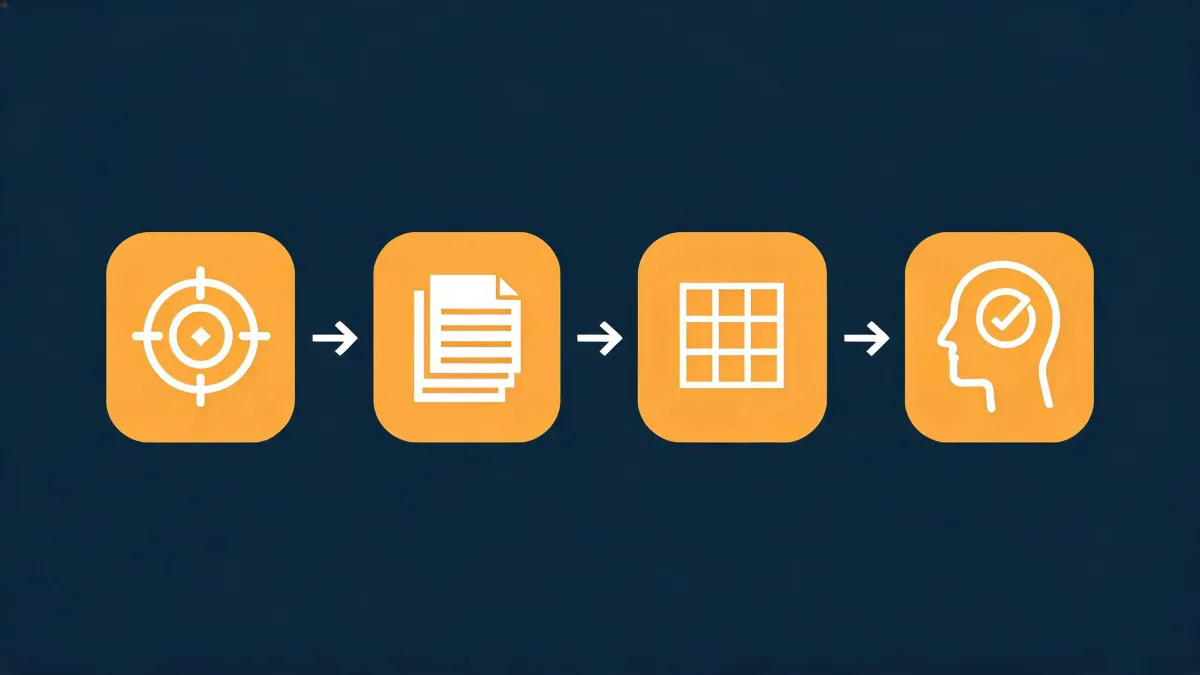
I would not buy an annual contract before a 30-day pilot. Start with 1,000 target accounts, not 100,000. Load them into okki-go, run waterfall enrichment, sync to the CRM, and compare field fill rate against your current process. Then run LinkedIn automation with human approval only. Measure four things: verified contact rate, CRM duplicate rate, SDR research hours saved, and email bounce rate.
If the pilot reduces wasted SDR hours and produces cleaner CRM records, the business case is real. If it only produces more contacts, it is not a solution. It is a bigger list.
Boundary conditions: when this approach is wrong
If you have fewer than 500 target accounts, a heavyweight data stack may not pay back. Manual research and a simple verifier can be the better procurement decision. If your CRM is already a mess, fix dedupe and ownership before adding enrichment. If your compliance team bans automation on LinkedIn, do not force it. If you are looking for a tool that removes human SDRs from the process, this is not it. The good versions keep humans in the loop.
I am still not convinced intent data is worth the premium for every segment. For enterprise accounts with long cycles, yes. For low-ACV transactional sales, maybe not. Run the pilot and let your own waste metrics decide. A small unit cost per record is rarely the smallest cost per conversation. For RevOps teams evaluating an okki go first prospecting workflow, start with the workflow, the compliance boundary, and the total cost. The answer usually shows up there.