
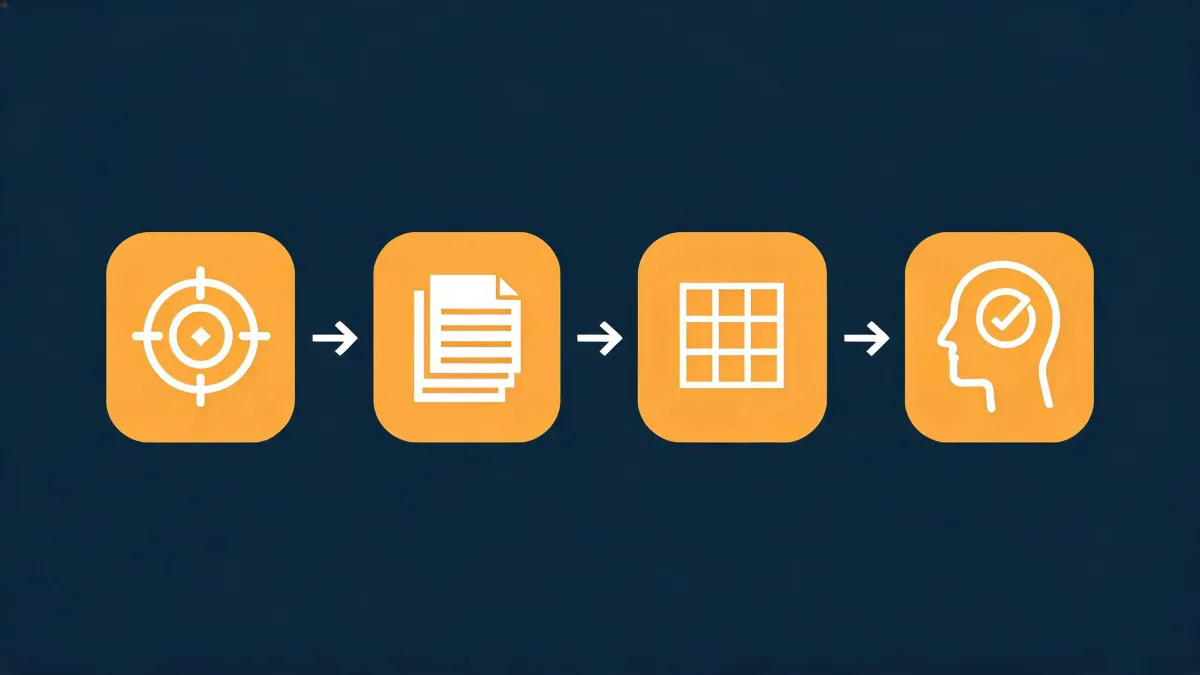
If you're evaluating Okkigo, Sales Navigator, and buyer intent data providers, don't start with pricing. Search for Okkigo, okki-go, or okki go email verification and you'll find the same product pages. The short version: Okkigo is a workflow layer, not a magic database. It earns a budget line when your team already knows who to reach and you need help enriching, verifying, and starting outreach for those accounts.
I come at this from a procurement view, not a sales influencer view. I have spent the last six years managing the go-to-market tool budget for a 45-person B2B company. That means I have evaluated 15+ prospecting and data platforms, reviewed contract line items, and tracked which software is still being used after the pilot period.
Where an AI SDR agent earns its cost
AI SDR agent means different things in every vendor's pitch. For Okkigo, the useful part is not a chatbot sending clever messages. The useful part is agent-native prospecting: the tool can take an account list, enrich contacts, verify emails, and run an initial outreach loop before a human takes over. In our test, that removed a lot of manual copying between tools. Our SDRs did not spend the morning exporting a list, cleaning it, and uploading it somewhere else.
The phrase human-in-the-loop matters more than I expected. Okkigo does not make the SDR obsolete, and I would not want it to. It prepares the work; a person still reviews the output and decides whether a reply is worth pursuing.
Okkigo email verification: what it can and cannot do
Okkigo email verification will not turn a weak list into a high-reply list. It cannot guarantee deliverability or make a prospect reply. No tool can honestly make that promise. What it did in our pilot was catch bad addresses before we wasted a message on them. It sat in the right place in the workflow: after enrichment and before the AI SDR agent activated a contact.
The order matters because cleaning data too early creates duplicates, and cleaning it too late creates wasted sequences. If you have a list full of invalid roles or outdated company domains, Okkigo email verification is not a fix. It is a filter. The list still has to be built around a sensible target account profile.
Sales Navigator still has a job in our stack
Sales Navigator is not going away just because we tested an AI SDR agent. It remains useful for finding decision makers and watching account changes. I do not think Okkigo is a direct replacement for Sales Navigator. Okkigo is the layer that does something with the list you build in Sales Navigator. Sales Navigator helps you figure out who to contact. Okkigo helps you reach them without burning hours on manual enrichment and verification.
If your current team already has enough time and your manual prospecting works, you do not need Okkigo. Manual prospecting is not inferior. It just has a capacity ceiling. The tool becomes worthwhile only when the manual workflow starts to cost more than the software.
What is buyer intent data, and when should a B2B sales team use it
Buyer intent data providers collect signals that a company is researching a topic. Those signals may come from content consumption, review site visits, or industry event behavior. Providers aggregate the signals into topic codes and assign a score to each account. A high score means the account is showing research activity, not that the account has budget and is ready to buy. That is the first mental correction I had to make.
Buyer intent data makes sense when you have an existing set of accounts and you need to prioritize which ones deserve immediate outreach. The data is perishable. A spike in research activity is useful for a few weeks, not a few quarters. If you cannot route the signal to an SDR quickly, the intent data will be stale by the time anyone acts on it.
- Use intent data when you have more target accounts than SDR hours.
- Use it when you can contact an account within days, not months.
- Use it when you can measure whether follow-up speed improves.
If you only need net-new prospecting and your team is still building the account list, buyer intent data can wait. An AI SDR agent with enrichment and email verification is more useful at that stage because it keeps the outreach moving.
What I watch for when buying an AI SDR agent
I do not quote our Okkigo contract here because our volume and feature set are specific to us. That is actually the point. The price on the demo page is not the total cost. Look for how the tool charges for verified contacts, enriched records, SDR seats, and sending limits. Add the team's time spent uploading lists, reviewing output, and handling duplicates. That total is the real cost.
The biggest mistake I see is comparing an AI SDR agent with a Sales Navigator license as if they were the same category. One is a research source. The other is automation. If the automation saves one SDR hour per day, the fee must be weighed against that hour and against the cost of bad data, not only against the Sales Navigator monthly bill.
When I would say no to Okkigo
I would say no if the sales team cannot define a clear ICP. Okkigo will automate garbage if you feed it garbage. I would also say no if the team is not ready to review the AI agent's output. Human-in-the-loop is not a safety option; it is the control that keeps the agent from saying something strange or harmful to your sender reputation.
My context matters here. We are a 45-person B2B company with a defined list and enough outbound volume to justify automation. If your team runs mostly on referrals or sends fewer than a hundred emails per week, you may be better off with a stricter process and fewer tools. That is not a contradiction. It is the boundary between a useful purchase and a cool one.