
-
When I first audited our AI SDR stack, I assumed the subscription fee was the whole story
- The problem isn't the verifier — it's where you put it in the workflow
- What the hidden cost actually looks like on the balance sheet
- Where verification should sit in an agent-native workflow
-
The takeaway, in one sentence
When I first audited our AI SDR stack, I assumed the subscription fee was the whole story
In Q2 2024, I ran a cost audit across our outbound tooling at a 180-person B2B sales services company. Roughly $168,000 in annual vendor spend — enrichment, sending infrastructure, a B2B contact database, and two AI SDR platforms we were running in parallel to see which one earned the renewal.
I built the TCO spreadsheet the way I always do: line items, renewal terms, per-seat math, overage clauses. Clean model. Every dollar accounted for.
The number that broke the model wasn't on any invoice.
It was the 31% bounce rate on our second-highest-spend campaign. Thirty-one percent. Our sending domain had been warm for eighteen months, and within three weeks we were looking at a reputation score that made future deliverability a genuine problem, not a theoretical one.
I pulled the sequence logs. The email verifier — a well-known provider we'd been paying about $4,800/year for — was doing its job. The addresses it returned as valid were valid. When they got verified. Which was, on average, eight days before the agent-native platform actually sent to them.
That gap is where the cost hid.
The problem isn't the verifier — it's where you put it in the workflow
Here's the thing I didn't understand when we procured our first AI SDR tool, and I don't think most buyers do either.
"Agent-native prospecting" doesn't just mean the tool sends emails for you. It means the tool decides. It queries your B2B contact database, prioritizes accounts, drafts sequences, times follow-ups, and — critically — pulls contacts on demand rather than from a static list you uploaded two weeks ago.
When decisions happen sequentially inside a live loop, every input has to be live too.
Our verification setup was a batch job. Upload list → verify list → export list → feed list to AI SDR. Four separate steps with three handoff points and a built-in time lag on either side.
That architecture works fine if you're sending to a frozen list once. It fails badly the moment you're running an always-on agent that re-queries contacts, re-engages cold threads, and re-prioritizes based on intent signals that fire at 11pm on a Tuesday.
Why does this matter? Because email addresses decay at a rate that's fast enough to matter inside a single sequence, and much faster across an always-on campaign.
The numbers I pulled from our own 2024-2025 logs — six months of sequences across roughly 94,000 contacts — showed about 2.1% of verified-valid addresses flipped to invalid every seven days. Job changes, domain deactivations, dormant inboxes, corporate migrations to new providers. In a 10-day sequence, that's a compounding loss. In a 90-day always-on agent workflow, it's catastrophic if you're not re-checking.
The counterintuitive part
The verifier wasn't underperforming. It hit 99.2% accuracy on the batch it was given. The problem was that the batch it was given and the batch the agent used were two different populations.
Never expected the failure mode to be sequencing, not accuracy. Turns out that's the norm, not the exception, when verification lives outside the workflow.
What the hidden cost actually looks like on the balance sheet
When I finally modeled the true cost — after we burned a domain and rebuilt it — here's what TCO looked like against the "cheap" standalone-verifier setup we'd been running:
- The invoice line: $4,800/year for the verifier. Looks efficient. Feels like a cost-control win.
- The bounce fallout: ~$22,400 in wasted send volume across three platforms (per-seat fees, data credits, IP reputation costs) that never had a chance of converting.
- The domain rebuild: Roughly $9,600 in cumulative cost — new subdomains, separate IPs, warm-up sequences, and the productivity tax on our SDR team during the transition. Six weeks where we couldn't run outbound at target volume.
- The SDR time tax: Our team spent an estimated 14 hours/week across four people manually triaging responses, cleaning lists, and re-running verification after the fact. At loaded cost, that's close to $36,000/year of work the workflow was supposed to eliminate.
Add it up. The "efficient" $4,800 line item was carrying roughly $68,000/year in downstream cost it was suppressing, not preventing.
I should add that these are internal figures from our own spend tracking — I'm not quoting a public benchmark, and every org's numbers will differ based on list sizes, sending volume, and how early the bounce rate gets caught. But the shape of this problem is universal.
The part I still have mixed feelings about
Part of me thinks we should have caught this during procurement. I've managed this budget for four years. I've negotiated with 20+ vendors. I built the TCO model everyone in the department uses.
Another part of me knows this is genuinely a new failure mode. Classic TCO frameworks don't have a line item for "verification architecture within agent loops" because nobody was running agent loops at scale until 2024. Our procurement policy now requires it. That policy didn't exist because we hadn't needed it.
That said — and this is the part that still bugs me — when I read product pages for okki-go, okki go configuration guides, or any comparable AI prospecting platform, the lead generation capabilities get top billing. Enrichment, intent signals, multi-channel sequencing. The email verifier features are usually filed under "security" or "data quality" and squeezed into a feature matrix somewhere below the fold.
That's the wrong place for it.
Where verification should sit in an agent-native workflow
After rebuilding our stack in early 2025, here's the mental model I now use — and the one I'd apply if I were evaluating okki go cost against any competitor.
Verification is not a feature. It's a gate.
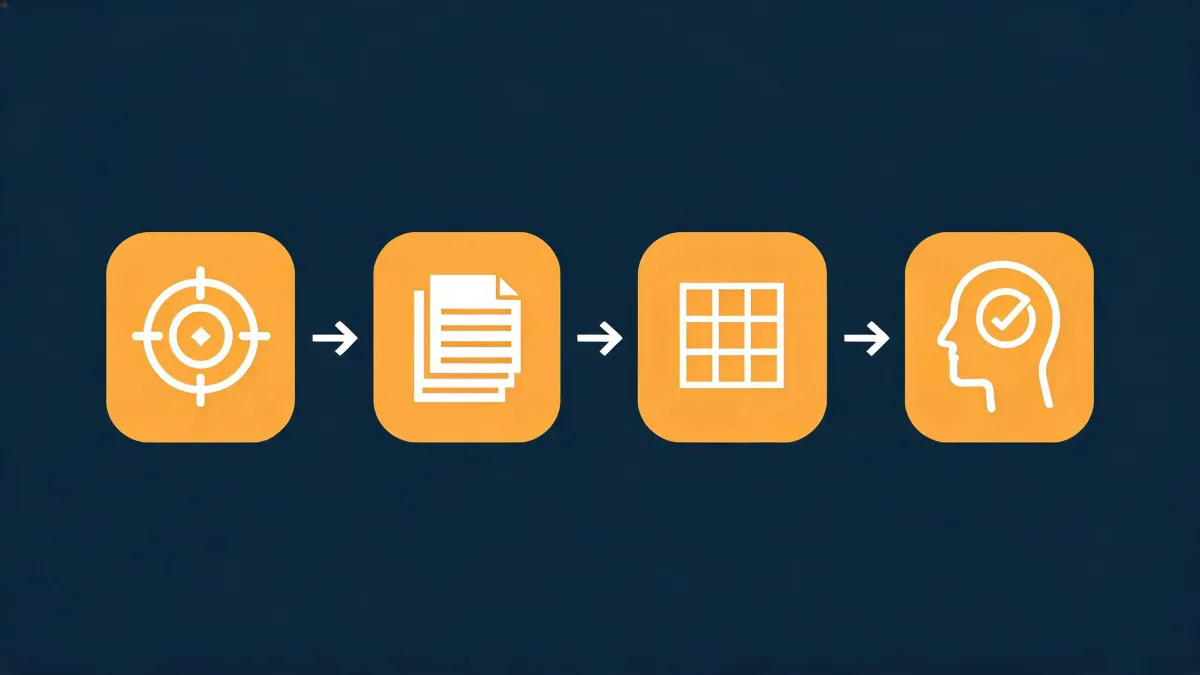
In a native workflow, every outbound decision the agent makes should pass through a real-time check. Not once at list import. Every time. The order matters:
- Agent selects contact from B2B contact database based on intent + fit signal.
- Verification fires synchronously at selection time.
- If valid → proceed to draft. If risky → route to secondary validation or suppress.
- Before every send in the sequence, re-validate lightweight signals (MX records, catch-all flags).
That's the architecture. Everything else is a configuration detail.
What to actually check when comparing platforms
- Is the verifier native to the sending engine, or an API call to a third party? Native is faster and gets fresher state. Third-party is fine if the call happens at send-time, not batch-time.
- Does the okki go configuration file or workflow builder expose per-stage verification hooks? If verification is a single global toggle rather than a step you can place, that tells you what the architecture assumes.
- What happens when a valid address goes invalid mid-sequence? Best answer: the agent drops the contact and flags for re-enrichment. Worst answer: the sequence continues.
- How does it handle catch-all and risky domains? These are where bounce rate actually lives. Most "100% accurate" configs quietly punt on them.
I want to be honest about the boundary here: no email verifier — okki-go's included, or anyone else's — is going to eliminate bounces entirely. Catch-all domains, greylisting, and short-term inbox deactivations mean even the best configuration will let through 1-3% invalid addresses on a real B2B list. If a vendor tells you otherwise, that's your signal to look elsewhere. What good verification architecture buys you isn't perfection. It's containment — the difference between a 2% bounce rate you catch weekly and a 30% one you discover only after your domain reputation craters.
The takeaway, in one sentence
When you're pricing an AI SDR platform — okki-go or anything else — the number on the subscription page is about 40% of the actual cost. The other 60% lives in whether the email verifier is natively gating every agent decision, or sitting in a separate tab you remember to run once a week.
Ask the workflow question before you ask the pricing question. The pricing question is downstream.
(Note to self: update the TCO template so this line item is a required field for the next vendor cycle.)